Water Softeners & Filtration Albuquerque, NM
Chalky white buildup on your faucets? Dishes coming out of the dishwasher spotty no matter what you try? Skin feeling dry the second you step out of the shower? That’s not your imagination — that’s Albuquerque’s water. We install and repair whole-house softeners and filtration systems sized for your actual home, not a one-size-fits-all box off a truck. Straight answers, upfront pricing, and a system that fits your water, your household, and your budget.
Your Water Softeners & Filtration Experts in Albuquerque
Locally owned & operated in Albuquerque | Licensed in New Mexico | 24/7 emergency availability | 24+ 5-star reviews
EXCELLENT Based on 39 reviews
 Posted on Google
 Nadine EnciniasI had the best experience when I called J&J plumbing. Jonathan came out the same morning I called. The work was fast, efficient, affordable and he helped me when I needed it the most!!! I definitely recommend them for all your plumbing needs. Thank you ❤Posted on Google
 Roxanne AragonJ&J answered immediately and was able to service my plumbing emergency immediately. Jonathan was professional and trustworthy. I will be calling J&J for all future plumbing needs.Posted on Google
 Jojo AragonHad a plumbing emergency and he was able to get to us right away. Honest, reliable and affordable. Will be calling him in the future for all plumbing work going forward.Posted on Google
 Bon LasJohnathan was Professional, Fast & Efficient Fixed our plumbing leak with the quickness! Highly recommend.Posted on Google
 jodi colchamiroJonathan was very efficient and communicative. He has good diagnostic skills and is a skilled independent plumber. I would highly recommend his services.Posted on Google
 Yevette LuceroWe had J & J plumbing come out and replace our broken kitchen faucet . What impressed me was when I called he actually answered, instead of me having to leave a message and wait for a call back. Jonathan went above and beyond on our service call he got us scheduled same day and did an awesome job. I would highly recommend this company for any and all of your plumbing needs.Posted on Google
 Cesar PinedoAfter calling big name companies they wanted to schedule us out days for an emergency plumbing issue. We called j&j plumbing and was answered by Jonathan who is very professional and came to fix our issue right away.Posted on Google
 Yahir EnriquezGood job came quick and fixed are problemPosted on Google
 Luana VigilJ&J did a great job repairing/installing a kitchen faucet and outside spigot for us. They were on time and completed the work quickly and everything works perfectly!Posted on Google
 Judith Zubiagreat & fast service! we had a running toilet and they came out and fixed the issue quickly! thank you so much! 100% recommend!Verified by TrustindexTrustindex verified badge is the Universal Symbol of Trust. Only the greatest companies can get the verified badge who has a review score above 4.5, based on customer reviews over the past 12 months. Read more
Get Free Estimate Now
What Do You Need?
Why Homeowners Call Us First
Albuquerque’s hard water is tough on plumbing. Mineral buildup affects water heaters, fixtures, and pipes across the city. A properly sized water softener helps protect your home and reduces costly repairs
We show up when we say we will. Same-day service, a real time window, a text when we’re on the way.
Upfront pricing before any work starts. You’ll know the cost before we touch anything.
Licensed, insured, background-checked. No stranger guessing their way through your home.
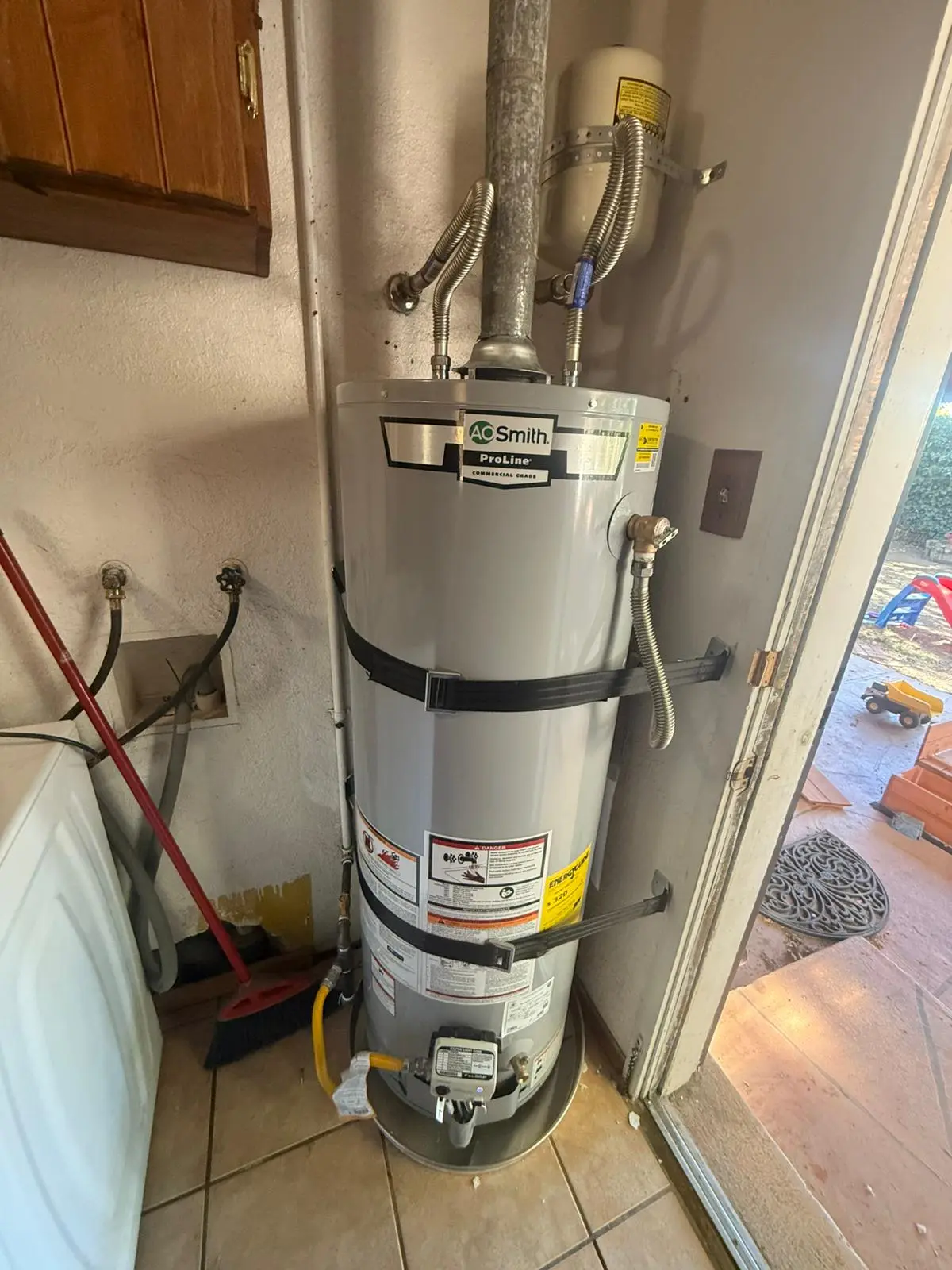
Why Albuquerque Homeowners Need This More Than Most
Albuquerque’s water is genuinely hard — heavier in dissolved calcium and magnesium than most U.S. cities, pulled largely from the Rio Grande and the underlying aquifer system. That’s not a marketing line, it’s why you’re seeing the buildup in the first place. We work on softener and filtration systems in nearly every kind of home this city has, from older places near Barelas and Old Town with original galvanized plumbing that hard water is especially rough on, to newer builds out toward Ventana Ranch and Rio Rancho where the pipes are newer but the water’s exactly as hard.
Signs Your Home Needs a Softener or Filtration System
White, chalky buildup (scale) around faucets, showerheads, and fixtures. This is mineral deposit from hard water, and it’s one of the most visible, common signs we see on service calls across the city.
Dishes and glassware coming out spotty or cloudy, even with rinse aid. Hard water minerals interfere with soap’s ability to rinse cleanly — this is a water hardness issue, not a dishwasher problem, more often than people expect.
Dry skin and dull hair after showering. Hard water leaves mineral residue on skin and hair instead of rinsing clean, and it’s a genuinely common complaint we hear from Albuquerque households, especially compared to people who’ve lived in softer-water cities.
Reduced water pressure over time. Scale buildup narrows pipe diameter from the inside, gradually. If your pressure has dropped slowly over a couple years rather than suddenly, hard water scale is a likely contributor.
Water heater, dishwasher, or washing machine failing earlier than expected. Appliances that heat or cycle water take the brunt of hard water damage. If you’re replacing these more often than the rated lifespan suggests, this is usually why.
Soap not lathering well, or needing more soap/detergent than you should. Hard water minerals bind with soap before it can lather properly — a subtle but telling sign.
A noticeable taste, smell, or cloudiness in tap water. This points more toward a filtration need than a softening one — softeners address hardness, filtration addresses taste, odor, and specific contaminants.
Common Technical Problems We Diagnose
Resin bed depletion (softeners) — the resin beads inside a softener tank wear out over years of use and need periodic regeneration or eventual replacement. A softener that’s stopped softening effectively is often a resin or regeneration cycle issue, not a full system failure.
Salt bridging — a hardened crust can form in the brine tank, especially with certain salt types or humidity conditions, preventing the salt from dissolving properly into the system. This is one of the most common “why isn’t my softener working” calls we get, and it’s often a straightforward fix.
Clogged or fouled filtration cartridges/membranes — sediment and mineral content here clog standard filters faster than in many other markets, and reverse osmosis membranes can foul prematurely without regular maintenance.
Bypass valve stuck or set incorrectly — sometimes a softener seems “broken” when it’s actually been left in bypass mode, often after other plumbing work was done nearby.
Undersized system for household demand — a softener sized for a smaller household won’t keep up with a larger one, leading to inconsistent softening that looks like a malfunction but is really a sizing issue from day one.
Low water pressure after installation — usually a sign the system was undersized for your home’s flow rate, not evidence that softeners “always” reduce pressure, which is a common misconception.
Simple Things You Can Check Before Calling
- Softener seems to have stopped working? Check the salt level in the brine tank first — running low or empty is the single most common cause.
- Salt in the tank but still not softening? Look for a hardened crust (salt bridge) sitting above the water level in the tank — if you see one, don’t try to break it apart with force; that’s worth a professional visit.
- System recently serviced or plumbing work done nearby? Check whether the bypass valve was left open — this alone can make a perfectly good system seem broken.
- RO system producing slow or reduced flow? Often a sign the pre-filter or membrane needs replacing — this is routine maintenance, not usually a sign of a bigger problem.
What’s not a DIY fix: Resin bed replacement, membrane replacement on RO systems, or anything involving the system’s connection to your main water line. These are quick, inexpensive professional visits — not worth risking a leak or a warranty issue by tackling yourself.
New System or Repair? A Straight Answer
Usually worth repairing:
- System is under 8-10 years old
- Issue is isolated to one component (valve, resin, salt bridge, filter cartridge)
- No signs of tank cracking or corrosion
Usually worth replacing:
- System is well past 10-12 years old and increasingly unreliable
- You’ve had repeat repairs in a short window
- Your household size or water usage has grown since the original system was sized
- You’re renovating anyway and want to right-size for your current home
Given how hard Albuquerque’s water runs, an undersized or aging system tends to show its age here faster than in a softer-water market — we’ll always tell you honestly which side of that line you’re on rather than defaulting to a sale.
Protecting What’s Already Been Affected
If you’re dealing with fixture buildup or reduced pressure, there’s a good chance your water heater has been quietly absorbing the same hard water damage — often longer than the visible symptoms suggest.
→ See Water Heater Services — worth checking, especially if your unit is 7+ years old.
Serving Your Neighborhood
We install and service softener and filtration systems across Albuquerque and Bernalillo County — from older homes near Old Town, Barelas, and Nob Hill where original plumbing feels hard water damage hardest, out to newer developments near Petroglyph National Monument and the Westside, up into the foothill homes below Sandia Crest, and out to Corrales, Rio Rancho, and Bernalillo. If you’re on well water out in the East Mountains, your water quality profile is different from city water customers, and we account for that when recommending a system — well water often needs additional filtration considerations beyond just softening.
Find your area: Northeast Heights · Westside · North Valley · Rio Rancho · Corrales · Downtown · Old Town · Uptown · Nob Hill · East Side · Sandia Heights · Los Ranchos · Bernalillo · South Valley · Kirtland AFB
FAQ – Water Softeners & Filtration
1. Is Albuquerque’s water actually harder than average, or does it just feel that way?
It genuinely runs harder than a lot of U.S. cities, due to the mineral content carried through the Rio Grande and aquifer-based water supply. It’s not just perception — it’s measurable, and it’s why softener and filtration demand is consistently high here.
2. Do I need both a softener and a filtration system, or just one?
They solve different problems. A softener addresses hardness (scale, buildup, appliance wear). Filtration addresses taste, odor, sediment, and specific contaminants. Many Albuquerque households benefit from both, but it depends on what’s actually bothering you — worth a quick water test before assuming you need everything.
3. How long does a whole-house softener system typically last here?
With regular maintenance, 10-15 years is realistic, though given our water hardness, systems that go unmaintained can show real decline closer to the 8-10 year mark.
4. Will a softener fix my low water pressure?
Sometimes — if scale buildup inside older pipes is the cause. But low pressure has several possible causes, and we’ll check before assuming a softener alone will solve it.
5. Do East Mountains well-water homes need something different than city-water homes?
Often yes. Well water can carry different mineral and sediment profiles than municipal water, and sometimes needs additional filtration steps beyond standard softening — this gets evaluated on-site, not assumed from a generic recommendation.
6. Is salt-based softening the only option?
No — salt-free conditioners exist and work differently (conditioning minerals rather than removing them), which some households prefer for dietary sodium reasons or environmental preference. Worth discussing which fits your household before installation.
7. How often does a softener need salt refilled?
Depends on household size and water usage, but many Albuquerque households check monthly given how hard our water runs and how quickly salt gets used relative to softer-water regions.
Your Neighbors Already Trust the Fix
EXCELLENTBased on 39 reviewsPosted on GoogleNadine EnciniasI had the best experience when I called J&J plumbing. Jonathan came out the same morning I called. The work was fast, efficient, affordable and he helped me when I needed it the most!!! I definitely recommend them for all your plumbing needs. Thank you ❤Posted on GoogleRoxanne AragonJ&J answered immediately and was able to service my plumbing emergency immediately. Jonathan was professional and trustworthy. I will be calling J&J for all future plumbing needs.Posted on GoogleJojo AragonHad a plumbing emergency and he was able to get to us right away. Honest, reliable and affordable. Will be calling him in the future for all plumbing work going forward.Posted on GoogleBon LasJohnathan was Professional, Fast & Efficient Fixed our plumbing leak with the quickness! Highly recommend.Posted on Googlejodi colchamiroJonathan was very efficient and communicative. He has good diagnostic skills and is a skilled independent plumber. I would highly recommend his services.Posted on GoogleYevette LuceroWe had J & J plumbing come out and replace our broken kitchen faucet . What impressed me was when I called he actually answered, instead of me having to leave a message and wait for a call back. Jonathan went above and beyond on our service call he got us scheduled same day and did an awesome job. I would highly recommend this company for any and all of your plumbing needs.Posted on GoogleCesar PinedoAfter calling big name companies they wanted to schedule us out days for an emergency plumbing issue. We called j&j plumbing and was answered by Jonathan who is very professional and came to fix our issue right away.Posted on GoogleYahir EnriquezGood job came quick and fixed are problemPosted on GoogleLuana VigilJ&J did a great job repairing/installing a kitchen faucet and outside spigot for us. They were on time and completed the work quickly and everything works perfectly!Posted on GoogleJudith Zubiagreat & fast service! we had a running toilet and they came out and fixed the issue quickly! thank you so much! 100% recommend!Verified by TrustindexTrustindex verified badge is the Universal Symbol of Trust. Only the greatest companies can get the verified badge who has a review score above 4.5, based on customer reviews over the past 12 months. Read more
Stop Fighting Albuquerque's Hard Water — Today
Stop putting up with cold showers or hard water stains. Get a free quote in minutes, or call now for same-day service.