Water Softener Installation in Albuquerque, NM
If you’re tired of white crust on your fixtures, soap that won’t lather right, and glasses that come out of the dishwasher spotted no matter what you do, a softener is usually the actual fix — not another cleaning product. Sizing and installing one right, tied into the main line before it splits off to your water heater and fixtures, is one of the water softener and filtration jobs Jonathan and the crew handle regularly across Albuquerque, and most installs are done in a single visit.
Your Water Heater Experts in Albuquerque
Locally owned & operated in Albuquerque | Licensed in New Mexico | 24/7 emergency availability | 24+ 5-star reviews
EXCELLENTTrustindex verifies that the original source of the review is Google. J&J gave me a qoute on the phone. Showed up on time the same day. They were able to fix my leaking toilet quickly and were very perfessional. The price was great, it acually came in lower then the qoute. Would I have them come back out to do work in the future! You can bet my money on it. I highly recommendPosted on GoogleTrustindex verifies that the original source of the review is Google. J&J repaired a few corroded pipes and a condensation line. Quick response, reasonable price, fast turnaround. I totally recommend using J&J!Posted on GoogleTrustindex verifies that the original source of the review is Google. great & fast service! we had a running toilet and they came out and fixed the issue quickly! thank you so much! 100% recommend!Posted on GoogleTrustindex verifies that the original source of the review is Google. I appreciate the promptness and the transparency that I was given.Verified by TrustindexTrustindex verified badge is the Universal Symbol of Trust. Only the greatest companies can get the verified badge who has a review score above 4.5, based on customer reviews over the past 12 months. Read more
Get Free Estimate Now
White or Chalky Buildup Around Faucets and Showerheads
That crusty white residue is mineral scale, plain and simple — calcium and magnesium coming out of the water and hardening onto anything it sits on.
Soap and Shampoo Won’t Lather Right
Hard water reacts with soap before it ever gets to your skin or hair, which is why you end up using more soap than you should just to get a decent lather.
Dishes and Glasses Come Out Spotty Even From a Clean Dishwasher
Those spots are mineral deposits drying on the glass, not a sign your dishwasher’s dirty or broken.
Your Skin’s Dry and Your Clothes Feel Stiff After Washing
Hard water leaves mineral residue on skin and in fabric fibers, which is why lotion and fabric softener end up doing double duty in a lot of Albuquerque homes.
Your Water Heater or Fixtures Keep Failing Early
If you’ve already replaced a water heater element or a faucet cartridge earlier than you should’ve had to, hard water scale is usually part of why.
Why Albuquerque’s Water Runs So Hard in the First Place
Our water comes with a heavy calcium and magnesium content, and that combination is what “hard water” actually means — it’s not about pressure or cleanliness, it’s mineral content dissolved right into the water itself. That mineral load is measured in grains per gallon, and most of the metro area runs high enough that a softener makes a real, noticeable difference rather than a marginal one.
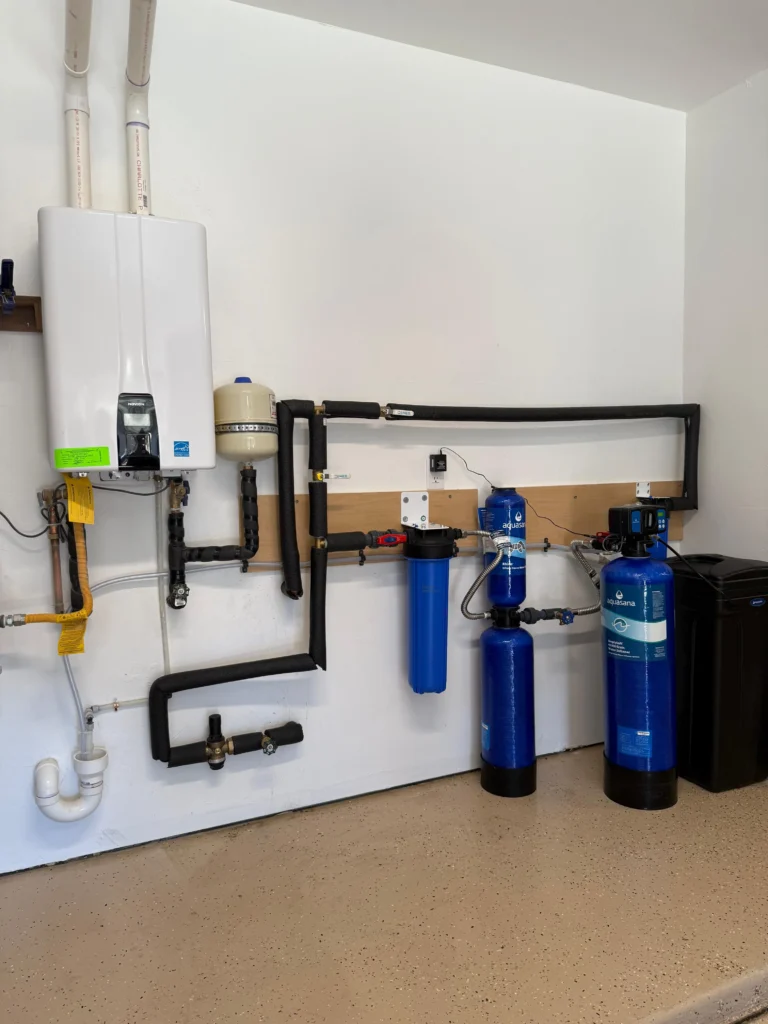
A softener works through a resin tank — a tank filled with small resin beads that grab onto the calcium and magnesium as water passes through and swap them out for sodium or potassium instead. Over time those beads get full and need to regenerate, which is where the brine tank comes in — a smaller tank holding a salt or potassium solution that flushes through the resin tank on a schedule and resets it to keep working.
The control valve is the brain of the whole system, and it’s usually what fails first on an older or poorly sized unit — either mistiming the regeneration cycle or letting hard water bypass the resin tank entirely without you noticing until the scale starts showing back up.
Most residential units today run on a metered control valve, which tracks actual water usage and regenerates based on how much you’ve actually used rather than running on a fixed timer regardless of whether the house was empty all week. Metered systems tend to use less salt and water over the course of a year than the older timer-based units still installed in a lot of homes, which is part of why we default to metered valves on new installs unless there’s a specific reason not to.
What Actually Happens on Installation Day
We start by testing your actual water hardness rather than assuming a number, since that’s what determines the right size unit for your household — a softener sized for a smaller home won’t keep up with a family of five, and one that’s oversized just wastes salt and water on regeneration cycles you don’t need. We also factor in things like how many bathrooms are running and whether you’ve got any water-heavy appliances, since sizing off square footage alone tends to miss the mark.
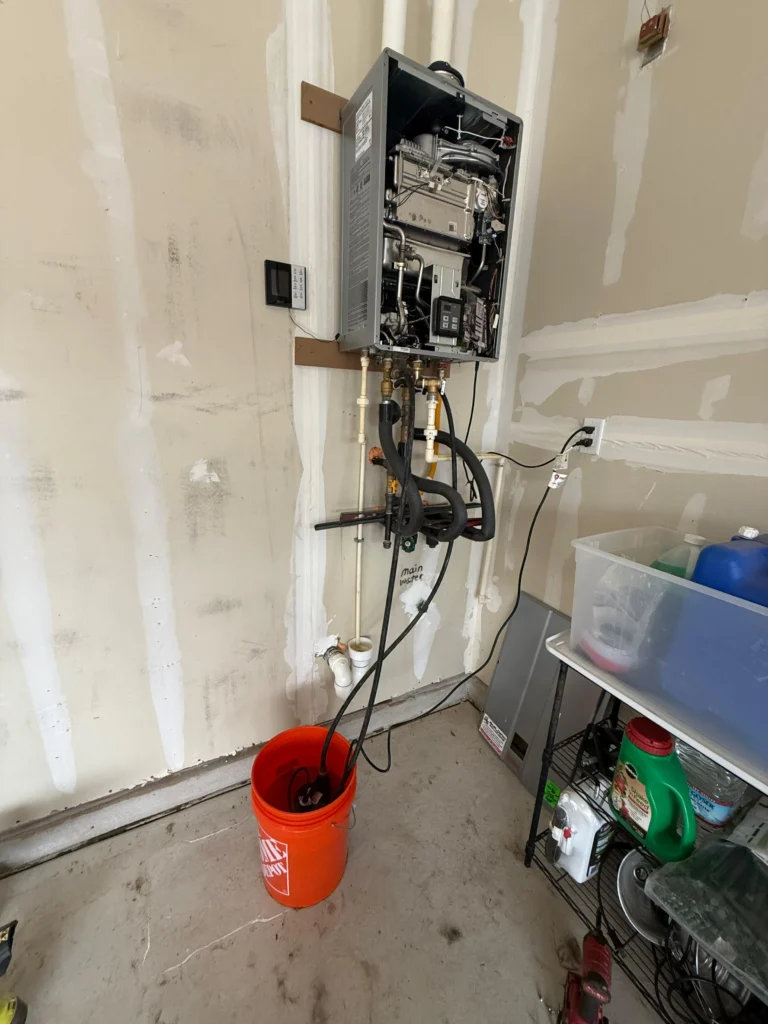
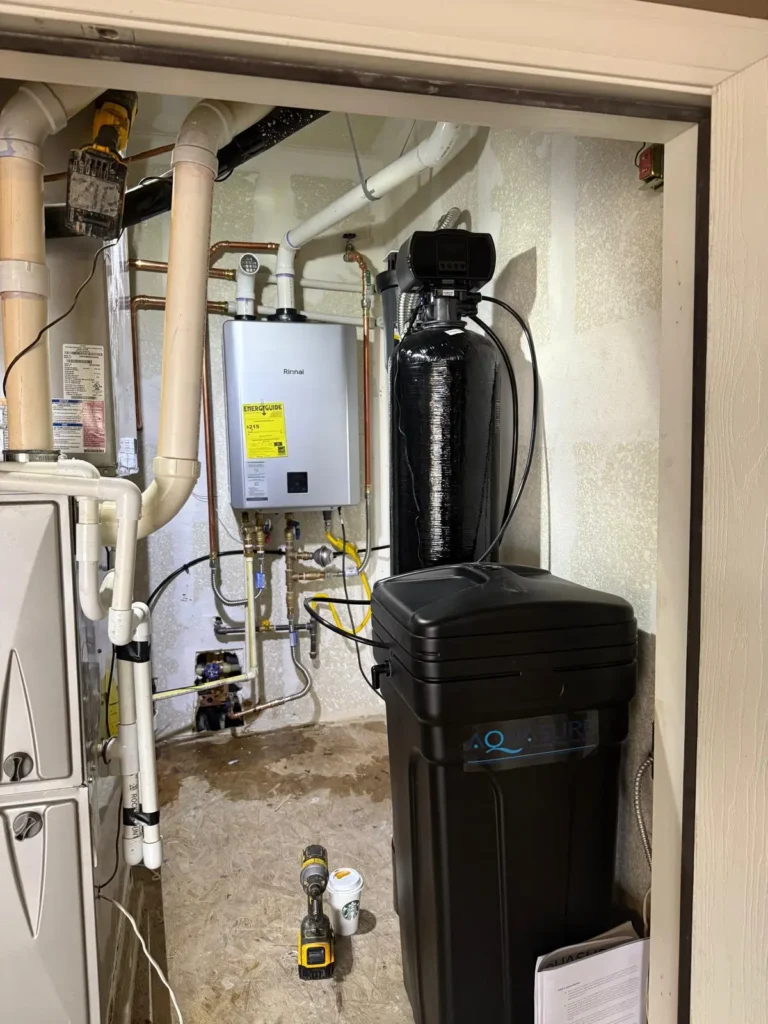
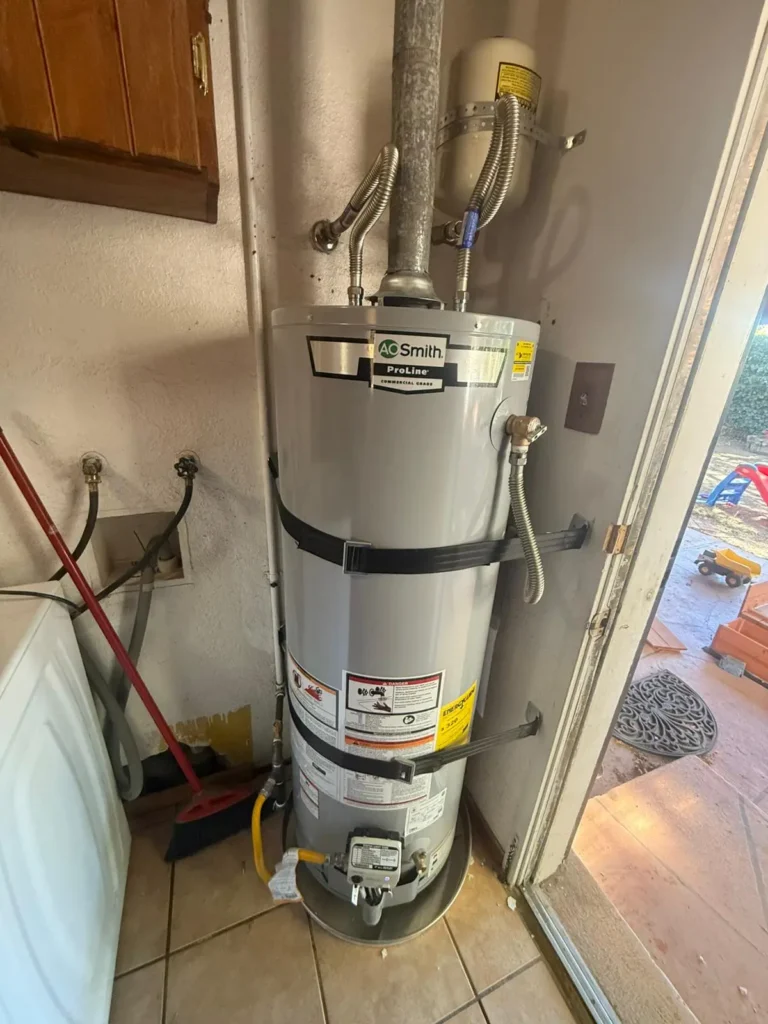
We tie the unit into your main line, typically right where it enters the garage or utility area, before it splits off toward your water heater and the rest of the house. We install a bypass valve as part of that connection, which lets outdoor spigots and irrigation lines skip the softener entirely — no reason to run softened water to your hose bib or sprinklers, and it saves salt in the long run. We run a drain line for the brine tank’s regeneration discharge, and we test the water afterward to confirm the hardness is actually where it should be, not just assume the install worked.
The mistake we see homeowners make when they’ve had a bad experience before: buying an undersized unit off the shelf without ever testing their actual water hardness, and then wondering why the scale never really goes away. We size around your real numbers, not a generic average.
What surprises people most is how fast the difference shows up — most people notice a change in how their skin and hair feel within the first week, well before the scale on old fixtures fully clears.
Homes in Los Ranchos and pockets of North Valley still on private wells tend to run even harder than the municipal average, since well water there often carries more dissolved mineral content before it ever reaches the tap — those installs sometimes need a slightly larger unit to keep up.
What You Can Check Yourself, and What’s Not a DIY Job
You can grab a hardness test strip and get a rough read on your own water before you call, which helps us have a more useful first conversation about sizing.
Actually installing the unit isn’t something we’d recommend tackling yourself. It means cutting into your main water line, which means the whole house is without water until it’s reconnected correctly, and a bad connection there doesn’t just mean a leak — it can mean water damage to your garage or wherever the line runs. The bypass valve and drain line also need to be set up right the first time, or you end up sending softened water somewhere it shouldn’t go, or backing up the brine tank’s discharge into a spot it was never meant to drain to.
Already Have an Old Softener That’s Not Working Right?
If you’ve already got a unit that’s failing to regenerate, running out of salt too fast, or just not softening the water anymore, that might be a fix rather than a full replacement — worth a look at Water Softener Repair before assuming you need a whole new system.
And if hard water’s already done damage to your water heater — shortened element life, more frequent flushing, early tank failure — it’s worth connecting the dots with our water heater services too, since a softener installed now protects whatever tank you’ve got going forward.
Will This Mean No Water All Day?
No. A standard install is usually done in a single visit, and the water’s only off for the short window it takes to make the connection — not the whole day.
Does Every Faucet in the House Get Softened Water?
Every indoor fixture does, from your water heater to your showers to your kitchen sink. Outdoor spigots and irrigation typically bypass the softener on purpose, since there’s no benefit to softening water that’s going on your lawn.
Common Questions Before Installing
How do I know if I actually need a softener, or if my water’s fine?
If you’re seeing scale buildup, spotty dishes, or dry skin and hair that a lotion routine hasn’t fixed, that’s usually hard water. We can test it for you and give you real numbers instead of a guess.
Is installation different for an older home versus a newer one?
Sometimes. Older homes around Barelas and parts of the South Valley tend to have tighter utility spaces and older main line connections, so the loop sometimes takes a bit more routing to fit cleanly. Newer builds out in Rio Rancho and the Westside usually have more straightforward garage setups to work with.
Will a softener fix my water heater problems?
It won’t undo damage that’s already happened, but it stops new scale from building up going forward, which means fewer flushes and a longer-running tank either way.
Can I get pricing before you install anything?
Yes. We’ll give you a price based on your actual household size and hardness test before any work starts.
Your Neighbors Already Trust the Fix
EXCELLENTTrustindex verifies that the original source of the review is Google. J&J gave me a qoute on the phone. Showed up on time the same day. They were able to fix my leaking toilet quickly and were very perfessional. The price was great, it acually came in lower then the qoute. Would I have them come back out to do work in the future! You can bet my money on it. I highly recommendPosted on GoogleTrustindex verifies that the original source of the review is Google. J&J repaired a few corroded pipes and a condensation line. Quick response, reasonable price, fast turnaround. I totally recommend using J&J!Posted on GoogleTrustindex verifies that the original source of the review is Google. great & fast service! we had a running toilet and they came out and fixed the issue quickly! thank you so much! 100% recommend!Posted on GoogleTrustindex verifies that the original source of the review is Google. I appreciate the promptness and the transparency that I was given.Verified by TrustindexTrustindex verified badge is the Universal Symbol of Trust. Only the greatest companies can get the verified badge who has a review score above 4.5, based on customer reviews over the past 12 months. Read more
Ready for Water That Actually Feels Different
Call J&J Plumbing and we’ll test your water, size the right unit for your house, and get it installed in a single visit — no more guessing with off-the-shelf units that aren’t sized for your home. We’ve installed these in homes all over Bernalillo County, from well-fed properties in Los Ranchos to newer builds out toward Westside and Rio Rancho.