
Reverse Osmosis Systems in Albuquerque, NM
If your tap water still doesn’t taste the way you want it to even after whole-house filtration, or you just want the cleanest possible water for drinking, cooking, and making coffee, reverse osmosis goes a step further than any filter alone can. It’s a point-of-use system built specifically for your kitchen sink, and it’s one of the water softener and filtration jobs Jonathan and the crew install across Albuquerque regularly, usually done in a single visit.
Your Water Heater Experts in Albuquerque
Locally owned & operated in Albuquerque | Licensed in New Mexico | 24/7 emergency availability | 24+ 5-star reviews
EXCELLENT Based on 39 reviews
 Posted on Google
 Nadine EnciniasI had the best experience when I called J&J plumbing. Jonathan came out the same morning I called. The work was fast, efficient, affordable and he helped me when I needed it the most!!! I definitely recommend them for all your plumbing needs. Thank you ❤Posted on Google
 Roxanne AragonJ&J answered immediately and was able to service my plumbing emergency immediately. Jonathan was professional and trustworthy. I will be calling J&J for all future plumbing needs.Posted on Google
 Jojo AragonHad a plumbing emergency and he was able to get to us right away. Honest, reliable and affordable. Will be calling him in the future for all plumbing work going forward.Posted on Google
 Bon LasJohnathan was Professional, Fast & Efficient Fixed our plumbing leak with the quickness! Highly recommend.Posted on Google
 jodi colchamiroJonathan was very efficient and communicative. He has good diagnostic skills and is a skilled independent plumber. I would highly recommend his services.Posted on Google
 Yevette LuceroWe had J & J plumbing come out and replace our broken kitchen faucet . What impressed me was when I called he actually answered, instead of me having to leave a message and wait for a call back. Jonathan went above and beyond on our service call he got us scheduled same day and did an awesome job. I would highly recommend this company for any and all of your plumbing needs.Posted on Google
 Cesar PinedoAfter calling big name companies they wanted to schedule us out days for an emergency plumbing issue. We called j&j plumbing and was answered by Jonathan who is very professional and came to fix our issue right away.Posted on Google
 Yahir EnriquezGood job came quick and fixed are problemPosted on Google
 Luana VigilJ&J did a great job repairing/installing a kitchen faucet and outside spigot for us. They were on time and completed the work quickly and everything works perfectly!Posted on Google
 Judith Zubiagreat & fast service! we had a running toilet and they came out and fixed the issue quickly! thank you so much! 100% recommend!Verified by TrustindexTrustindex verified badge is the Universal Symbol of Trust. Only the greatest companies can get the verified badge who has a review score above 4.5, based on customer reviews over the past 12 months. Read more
Get Free Estimate Now
Drinking Water Still Tastes Off Even With a Filter Installed
Standard filtration handles sediment, chlorine, and taste well, but it’s not built to strip out dissolved minerals and solids the way reverse osmosis is — if water still tastes flat or mineral-heavy after filtration, RO is usually the next step.
You Want the Cleanest Possible Water for Cooking or Formula
A lot of families choose RO specifically for peace of mind around water used for infant formula, cooking, or anyone in the house who’s particular about water quality.
Your Coffee Maker or Ice Maker Keeps Building Up Scale
Dissolved minerals that make it past standard filtration still show up as scale in small appliances over time — RO strips those out at a level a sediment or carbon filter alone doesn’t reach.
You’re Relying on Bottled Water for Drinking at Home
If you’re buying cases of water because the tap doesn’t taste right, an RO system under the sink gets you that same quality on demand, without the trips to the store.
How Reverse Osmosis Actually Works
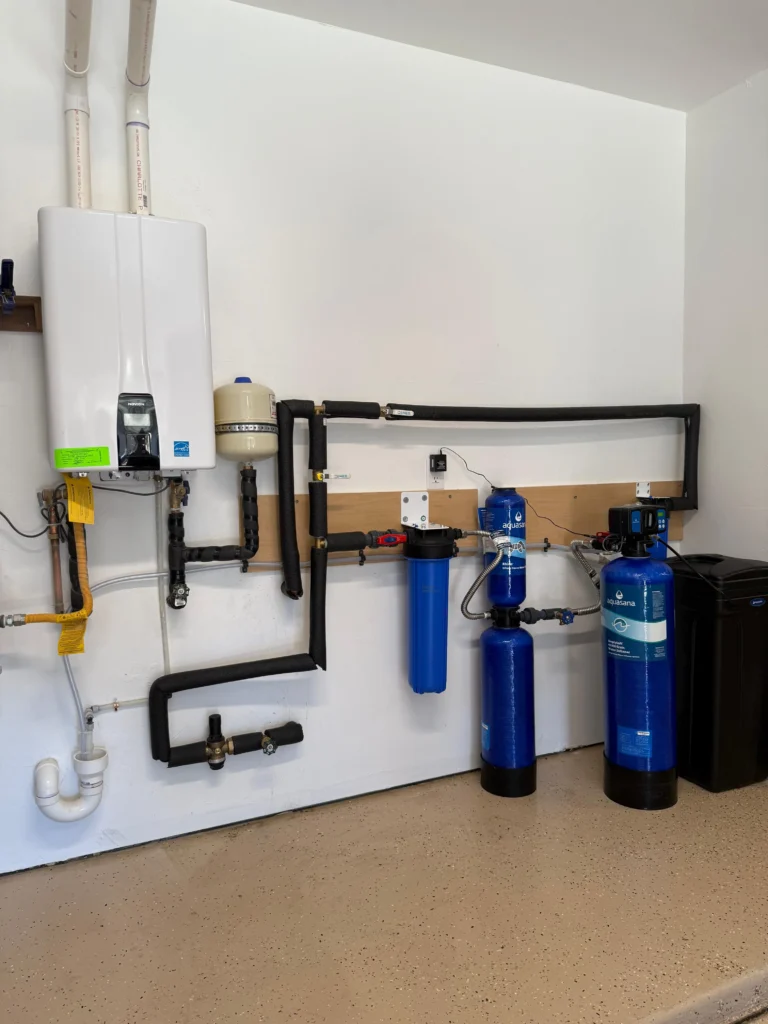
RO systems push water through a semi-permeable membrane under pressure — a membrane fine enough that dissolved solids, many contaminants, and residual minerals can’t pass through it, while clean water does. That’s a different mechanism than a carbon filter, which works by adsorption and catches chlorine and organic compounds well but doesn’t touch dissolved minerals the way a membrane does. Think of the difference as catching things versus screening them out at a molecular level — carbon grabs onto specific compounds as water passes by, while the membrane physically blocks anything too large to fit through its pores.
Before water ever reaches the membrane, it runs through pre-filter stages — usually a sediment filter first, then a carbon filter — that protect the membrane from particles and chlorine that would otherwise clog or degrade it early. After the membrane, most systems run water through a final polishing filter right before it reaches the faucet, and some include a remineralization stage that adds back a small amount of mineral content for taste, since fully stripped water can taste noticeably flat to some people.
The filtered water gets stored in a small pressurized tank under the sink, which is what lets you get a steady flow at the dedicated RO faucet instead of waiting on the membrane to produce water in real time — membranes work slowly, and without a storage tank you’d be standing at the sink waiting on drops. RO systems also send a portion of water to drain during the filtration process — older systems waste more than newer ones, and that ratio is worth asking about if efficiency matters to you.
What We Actually Do on Install Day
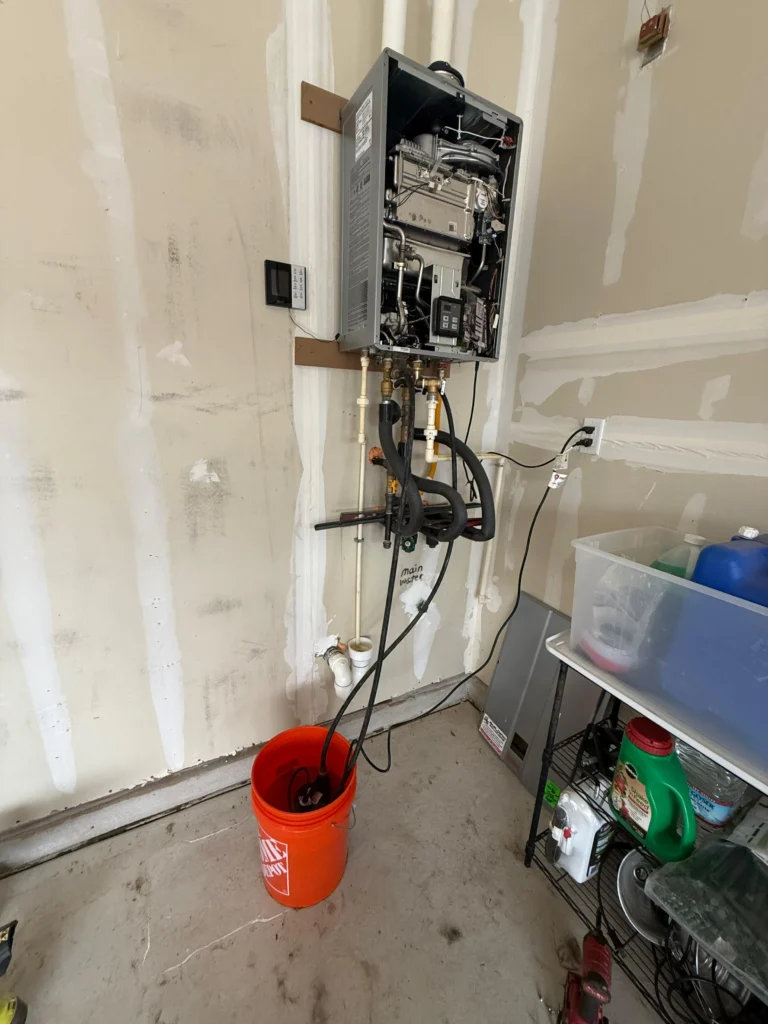
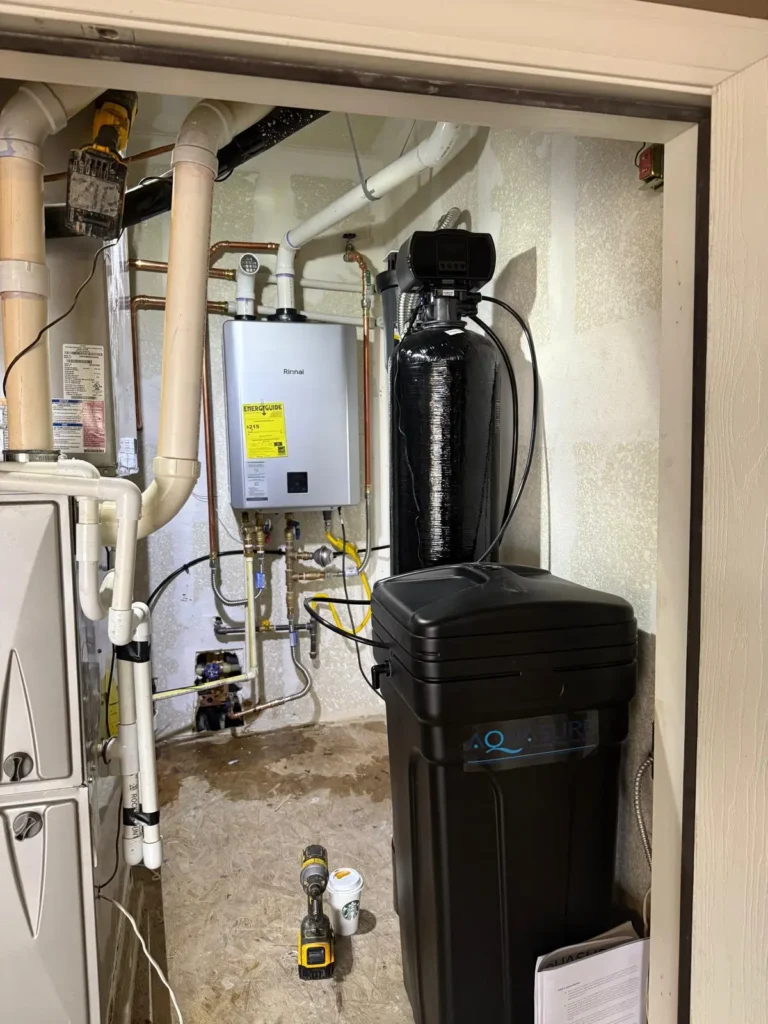
We test your water’s total dissolved solids first, so you’ve got a real before-and-after number instead of just a taste impression. We install the system under the kitchen sink, tie the pre-filter stage into your cold water supply line, and run a dedicated line to a new RO faucet mounted at the sink — a separate tap from your regular kitchen faucet, since RO water isn’t meant to run through your everyday plumbing. If you’re already thinking about upgrading your kitchen faucet at the same time, that falls under our faucets work too, and it’s easy to handle both in the same visit. We tap the drain line for the system’s discharge, set the storage tank, and test the finished water before we call it done.
The mistake we see most: homeowners on hard water skipping proper pre-filtration or a softener ahead of the RO system, which lets scale build up on the membrane itself and shortens its life dramatically faster than it should last. If your water’s hard, pairing RO with our Water Softener Installation protects the membrane and gets you more years out of it before a replacement’s needed — a small upfront addition that saves a bigger membrane bill down the road.
What surprises people most is just how much cleaner the water tastes compared to standard filtration alone — most people notice the difference on the very first glass, not after some adjustment period.
We see a fair number of these installs out in Los Ranchos and parts of Bernalillo, where households on private wells sometimes deal with nitrate levels from nearby agricultural land that a standard carbon filter genuinely can’t reduce — RO is one of the few home systems that handles nitrates effectively, which makes it a more meaningful upgrade there than a taste preference alone.
What You Can Check Yourself, and What’s Not DIY
Once installed, checking and swapping the pre-filter cartridges on schedule is a homeowner-friendly job on most systems — usually a quick twist-off, twist-on process with no tools needed. Some people also pick up a cheap TDS meter to keep an eye on performance between filter changes, since a rising number over time is usually the first sign a filter stage needs attention before taste even changes.
The install itself isn’t a DIY project. It means tapping into your cold water supply and your drain line, and getting the drain connection wrong — especially without a proper air gap where code requires one — can lead to water backing up into the system instead of draining out correctly. We set it up right the first time so you’re not troubleshooting a plumbing problem months later.
Do I Need This If I Already Have Whole-House Filtration?
They solve different problems. Whole-house filtration handles sediment, chlorine, and taste across your entire home — see our Whole-House Filtration Systems page for that side of things. RO goes further, but only at the tap it’s installed on, which is why most people run it specifically for drinking and cooking water rather than the whole house. A lot of homes run both together rather than picking one over the other, since they’re solving genuinely different problems instead of competing for the same job.
If you’re not sure where your water actually stands before deciding, we can test it for you on the spot — real numbers instead of guessing whether RO is worth it for your household.
Does This Waste a Lot of Water?
Some water does go to drain as part of the filtration process, more on older systems than newer ones. If that matters to you, ask about efficient system options when you call — the difference between an older and a current unit’s waste ratio is significant.
Will It Lower My Water Pressure at the Sink?
No. The storage tank keeps water ready to go at normal pressure, so you’re not waiting on the membrane in real time every time you fill a glass.
Common Questions Before Installing
How long does a membrane actually last?
Typically a few years depending on your water quality and how well it’s protected by pre-filtration — hard water especially shortens membrane life if there’s no softener ahead of it. We’ll walk you through realistic expectations for your specific water when we install.
Is installation messy or disruptive?
No. Everything happens under the sink, and your regular kitchen faucet keeps working the whole time — the RO faucet is a separate, dedicated tap that doesn’t interfere with anything you’re already using.
Do people in newer homes out in Rio Rancho still need this if the water’s already treated?
Sometimes. Municipal treatment handles safety, but it doesn’t remove everything some households want gone for taste or peace of mind — RO is a common upgrade even in newer construction for exactly that reason.
Can I get pricing before you start?
Yes, always — we’ll test your water and give you a number before any work begins.
Your Neighbors Already Trust the Fix
EXCELLENTBased on 39 reviewsPosted on GoogleNadine EnciniasI had the best experience when I called J&J plumbing. Jonathan came out the same morning I called. The work was fast, efficient, affordable and he helped me when I needed it the most!!! I definitely recommend them for all your plumbing needs. Thank you ❤Posted on GoogleRoxanne AragonJ&J answered immediately and was able to service my plumbing emergency immediately. Jonathan was professional and trustworthy. I will be calling J&J for all future plumbing needs.Posted on GoogleJojo AragonHad a plumbing emergency and he was able to get to us right away. Honest, reliable and affordable. Will be calling him in the future for all plumbing work going forward.Posted on GoogleBon LasJohnathan was Professional, Fast & Efficient Fixed our plumbing leak with the quickness! Highly recommend.Posted on Googlejodi colchamiroJonathan was very efficient and communicative. He has good diagnostic skills and is a skilled independent plumber. I would highly recommend his services.Posted on GoogleYevette LuceroWe had J & J plumbing come out and replace our broken kitchen faucet . What impressed me was when I called he actually answered, instead of me having to leave a message and wait for a call back. Jonathan went above and beyond on our service call he got us scheduled same day and did an awesome job. I would highly recommend this company for any and all of your plumbing needs.Posted on GoogleCesar PinedoAfter calling big name companies they wanted to schedule us out days for an emergency plumbing issue. We called j&j plumbing and was answered by Jonathan who is very professional and came to fix our issue right away.Posted on GoogleYahir EnriquezGood job came quick and fixed are problemPosted on GoogleLuana VigilJ&J did a great job repairing/installing a kitchen faucet and outside spigot for us. They were on time and completed the work quickly and everything works perfectly!Posted on GoogleJudith Zubiagreat & fast service! we had a running toilet and they came out and fixed the issue quickly! thank you so much! 100% recommend!Verified by TrustindexTrustindex verified badge is the Universal Symbol of Trust. Only the greatest companies can get the verified badge who has a review score above 4.5, based on customer reviews over the past 12 months. Read more
Ready for Water That Actually Tastes Clean
Call J&J Plumbing and we’ll test your water, walk you through what RO actually removes for your specific situation, and get a system installed in a single visit. We’ve put these in all over Bernalillo County, from well-fed homes out in North Valley to newer builds closer to Northeast Heights and condos near Downtown running compact under-sink units.