New Construction/Rough-In Plumbing in Albuquerque, NM
Before the drywall goes up, the plumbing has to be right — every drain line, vent, and supply line locked in and ready for inspection, because once those walls close, fixing a mistake means opening them back up. Rough-in is the part of our new construction & repipe work Jonathan and the crew get called in for most on new builds, additions, and casitas across Albuquerque, and getting it right the first time is the whole point — no callback after the inspector signs off, no surprise when the tile guy shows up and the drain’s sitting six inches off.
Your Water Heater Experts in Albuquerque
Locally owned & operated in Albuquerque | Licensed in New Mexico | 24/7 emergency availability | 24+ 5-star reviews


 Trustindex verifies that the original source of the review is Google.
 Trustindex verifies that the original source of the review is Google.
 Trustindex verifies that the original source of the review is Google.
 Trustindex verifies that the original source of the review is Google.
 Trustindex verifies that the original source of the review is Google.
 Trustindex verifies that the original source of the review is Google.
 Trustindex verifies that the original source of the review is Google.
 Trustindex verifies that the original source of the review is Google.
 Trustindex verifies that the original source of the review is Google.
 Trustindex verifies that the original source of the review is Google.
Get Free Estimate Now
Starting From Nothing? New Construction Follows the Plans, Not a Workaround
A ground-up new build starts with nothing but a slab and open framing. There’s nothing to work around yet, so it’s mostly a matter of following the plans and hitting code cleanly the first time.
Adding On or Remodeling? You’re Tying Into a System That’s Already There
An addition or a remodel means matching what’s already in the ground or the walls, not starting clean. That’s a different job than new construction, and it’s where most of the surprises show up.
Building a Casita Out Back? That’s Its Own Kind of Rough-In
A casita or accessory unit — something we’re seeing a lot more of on the bigger lots around Los Ranchos and the North Valley — comes with its own decision up front: does it tie into the main house’s line, or get its own service connection entirely.
What’s Actually Going in the Walls and Under the Slab
The drain-waste-vent system — the DWV, plumbers just call it the waste line — has to slope correctly so gravity actually carries waste to the sewer instead of sitting in the pipe. Get the slope wrong by even a little and you’ve got a slow drain baked into the house before anyone’s moved in.
Every fixture needs a vent — a pipe that runs up through the roof so air can get in behind the water as it drains, which is why a toilet doesn’t glug and gurgle every time it flushes. Skip a vent or undersize one and you get exactly that gurgling, plus slow drains that no amount of plunging fixes, because the problem isn’t the drain, it’s the air.
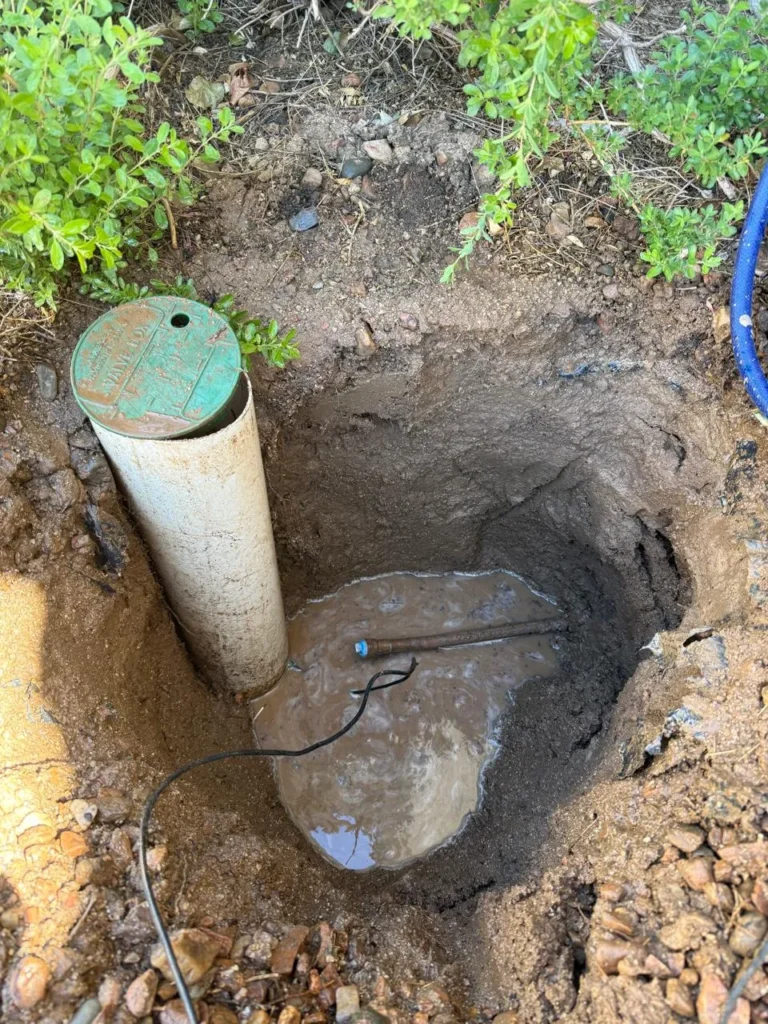
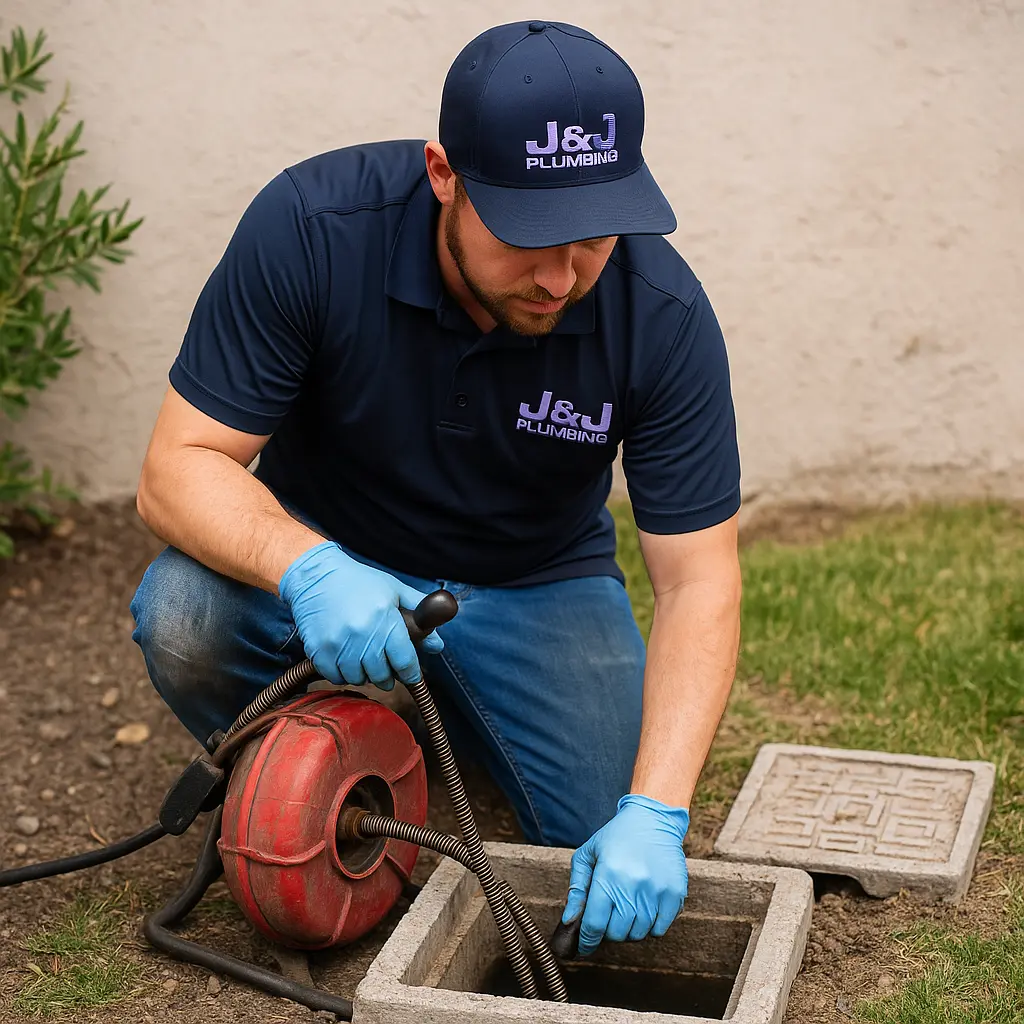
Cleanouts — access points built into the line so a clog can be snaked out later without tearing into a wall — have to go in at the right spots now, because retrofitting one after drywall’s up means cutting concrete or opening a finished wall. And the supply side, mostly PEX these days, has to be sized and routed so nobody’s stuck with weak pressure in the back bathroom because the line feeding it was an afterthought. If the build’s got a gas range, dryer, or a future gas water heater in the plans, stubbing that out now is part of the same conversation — that side of it falls under our gas line services, and it’s a lot cheaper to plan for than to add after the walls are closed.
How We Actually Run a Rough-In Job
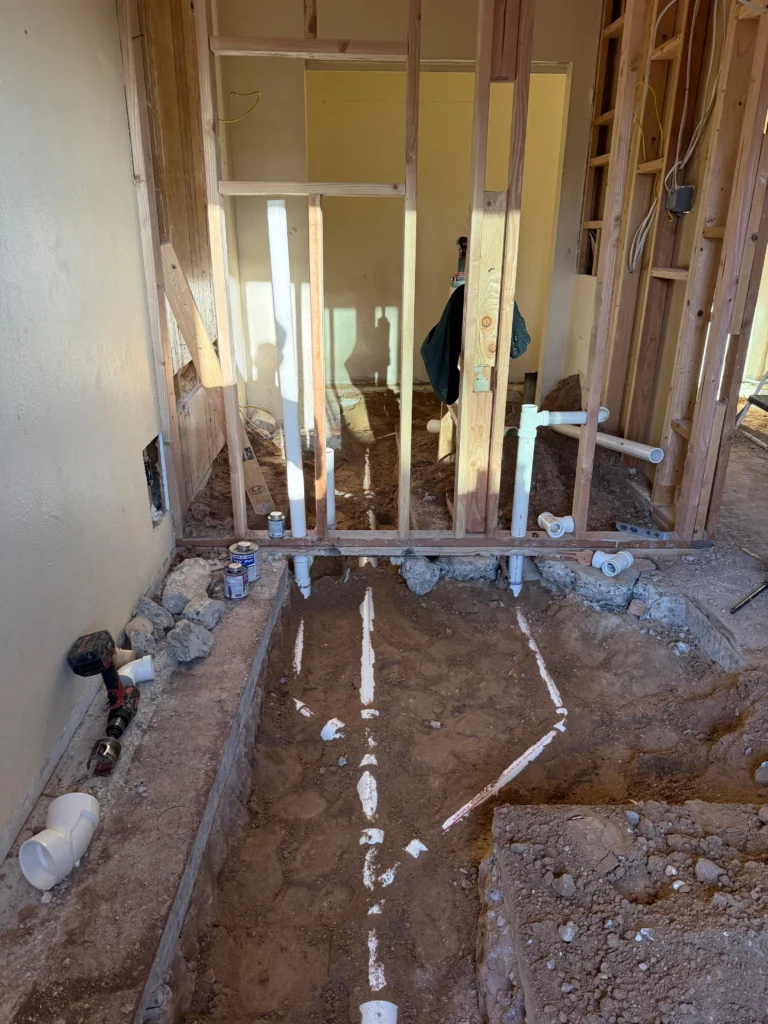
We start with the plans, not a guess — fixture locations, pipe sizing, and vent runs all get laid out before anyone touches a saw. Lines go in, we pressure-test the supply side and air- or water-test the DWV system before anything gets covered, and then we wait on the inspector. Nothing gets closed up until that inspection’s signed off, because covering an untested line to save a day is exactly how a leak ends up hidden behind finished drywall for a year.
The mistake we see most: a homeowner or designer changes a fixture location — moves a sink over, flips which wall the toilet’s on — after rough-in’s already done, and doesn’t mention it until the tile’s about to go down. Moving a drain line at that point means cutting into a slab or a finished wall instead of an easy fix during framing. What surprises people is how much of this job isn’t preference at all — vent sizing, cleanout spacing, slope minimums, they’re set by code, not by what looks tidiest on paper.
Additions and remodels around older parts of town add another wrinkle. Tying a new line into an existing sewer lateral near Old Town or established blocks of the North Valley sometimes means running into original clay pipe with decades of mature tree roots already working their way in — worth knowing about before we tie new work into it, not after. Sometimes what we find isn’t just a bad section, it’s a whole existing system on its way out, and at that point the honest move is folding a whole-home repiping into the addition rather than tying clean new pipe into old pipe that’s already failing.
One Thing Worth Locking Down With Your Builder Before We Show Up
Confirm the fixture layout is actually final before rough-in starts — toilet location, tub or shower placement, sink positions, all of it. That’s the one thing that’s cheap to change on paper and expensive to change once pipe’s in the ground or the wall. If you’re still deciding between two layouts, decide before we’re on-site, not after.
What’s not flexible once we’ve roughed it in: moving a drain line isn’t a same-day fix. It’s cutting concrete or opening a wall that’s already closed, which is a different job than the one you originally scoped.
New Build vs. Addition vs. Casita — the Work Looks Different Even Though the Trade’s the Same
A new build out in Rio Rancho or the Westside usually means open framing and a clean slate — we’re not working around anything, just building it right the first time. An addition or a remodel closer in, out toward Northeast Heights or established blocks of Bernalillo, means matching an existing system, and sometimes finding out the existing vent stack was undersized to begin with, which we’ll flag before it becomes our problem to fix under the new work.
A casita or accessory dwelling is mostly a permitting and jurisdiction question before it’s a plumbing one — whether you’re inside city limits or out in unincorporated Bernalillo County changes which inspector signs off and sometimes what’s required for the sewer or septic tie-in. We sort that out with you before we ever cut a trench.
This Covers Rough-In, Not an Existing Home With a Problem Right Now
Rough-in plumbing means the supply and drain lines that go in before drywall — it doesn’t include setting the actual fixtures once finishes are done; that’s a separate scope we’ll quote alongside or after the rough-in, not bundled into it by default. And if you’re dealing with an active leak, a backed-up line, or something failing right now in a home that’s already lived in, that’s not a rough-in job at all — that’s an emergency plumbing call, and we’ll get someone out same-day instead of scheduling it like a construction phase.
Common Questions Before You Call
Do you pull the permit, or does my builder?
Depends on the job. On a project where we’re the plumbing contractor of record, we pull it. If a general contractor’s running the whole build, it’s usually them, and we coordinate our inspection timing with their schedule either way.
How long does rough-in actually take?
A single addition or a bathroom remodel might be a day or two. A full new-build house usually runs several days, spread across the framing schedule so we’re not in the way of other trades. We’ll give you a real number once we’ve seen the plans.
Does rough-in work differently inside the city versus out in the county?
Sometimes. Jobs out in Bernalillo or unincorporated parts of the county can fall under a different inspection process than something inside Albuquerque city limits, and casita or accessory-unit projects especially depend on which jurisdiction you’re in. We check that before quoting so there’s no surprise at inspection time.
Do you install the fixtures too, or just the rough plumbing?
Rough-in is the pipe behind the walls — supply, drain, and vent. Setting the actual toilet, sink, or tub happens later, once finishes are in, and we’re glad to handle that too, but it’s a separate stage we’ll quote on its own.
Your Neighbors Already Trust the Fix
Trustindex verifies that the original source of the review is Google. Trustindex verifies that the original source of the review is Google. Trustindex verifies that the original source of the review is Google. Trustindex verifies that the original source of the review is Google. Trustindex verifies that the original source of the review is Google. Trustindex verifies that the original source of the review is Google. Trustindex verifies that the original source of the review is Google. Trustindex verifies that the original source of the review is Google. Trustindex verifies that the original source of the review is Google. Trustindex verifies that the original source of the review is Google. Ready to Get the Plumbing Right Before the Walls Close
Call J&J Plumbing and we’ll go over the plans, walk you through timing with your build schedule, and give you a real number before we cut a single line. We’ve roughed in new builds, additions, and casitas all over Bernalillo County, from new construction out in Rio Rancho and the Westside to additions tying into original lines near Old Town and the North Valley.