
Whole-Home Repiping in Albuquerque, NM
Your pipes aren’t failing all at once — they’re failing one at a time, and that’s exactly what makes it confusing. A pinhole leak here, a rusty patch there, a fix that holds for six months before the next one shows up somewhere else. At some point the question isn’t “which pipe broke this time,” it’s whether the whole system’s on its way out, and that’s the call Jonathan and the crew field most in our new construction & repipe work across Albuquerque. When it’s the pipe itself, not just one bad fitting, whole-home repiping stops being overkill and starts being the obvious move. We’ll walk the whole house with you, section by section, and give you a real number before anyone opens a wall.
Your Water Heater Experts in Albuquerque
Locally owned & operated in Albuquerque | Licensed in New Mexico | 24/7 emergency availability | 24+ 5-star reviews


 Trustindex verifies that the original source of the review is Google.
 Trustindex verifies that the original source of the review is Google.
 Trustindex verifies that the original source of the review is Google.
 Trustindex verifies that the original source of the review is Google.
 Trustindex verifies that the original source of the review is Google.
 Trustindex verifies that the original source of the review is Google.
 Trustindex verifies that the original source of the review is Google.
 Trustindex verifies that the original source of the review is Google.
 Trustindex verifies that the original source of the review is Google.
 Trustindex verifies that the original source of the review is Google.
Get Free Estimate Now
Rusty Water From More Than One Faucet Is the Big Tell
One rusty faucet usually means one bad section of pipe, or a water heater that needs flushing. Rusty water from the kitchen sink, the bathtub, and the hose bib all in the same week — that’s not a coincidence. That’s pipe scale breaking loose from the inside of old galvanized line, and it doesn’t get better on its own.
You’ve Already Patched the Same Section Twice
If we’ve been out to fix a pinhole leak under your kitchen sink twice in the last year, that’s not bad luck. That’s a pipe that’s thinning out everywhere, not just at the spot that happened to give first. Patching the same run a second time is usually money spent on a problem that’s going to show up three inches down the line next time.
Water Pressure That’s Dropped House-Wide, Not Just One Room
Low pressure in one shower is usually a clogged showerhead or a bad cartridge. Low pressure everywhere — kitchen, bathroom, hose bib, all at once — means the inside of the pipe itself has narrowed up with scale and rust until there’s barely a channel left for water to move through. You can run a snake through a drain. You can’t snake the inside of a supply line.
Pipe Actively Spraying, Flooding, or Bursting Behind a Wall? Stop and Call Now
That’s not a wait-for-an-appointment problem, and it’s not really a repiping conversation yet either — it’s a right-now problem. Shut off the main if you can get to it, and get someone out immediately. That’s an emergency plumbing call, not a scheduled repipe estimate, even if a full repipe ends up being the long-term fix once the immediate flooding’s handled.
Why Old Galvanized Pipe Fails All at Once, Not Gradually
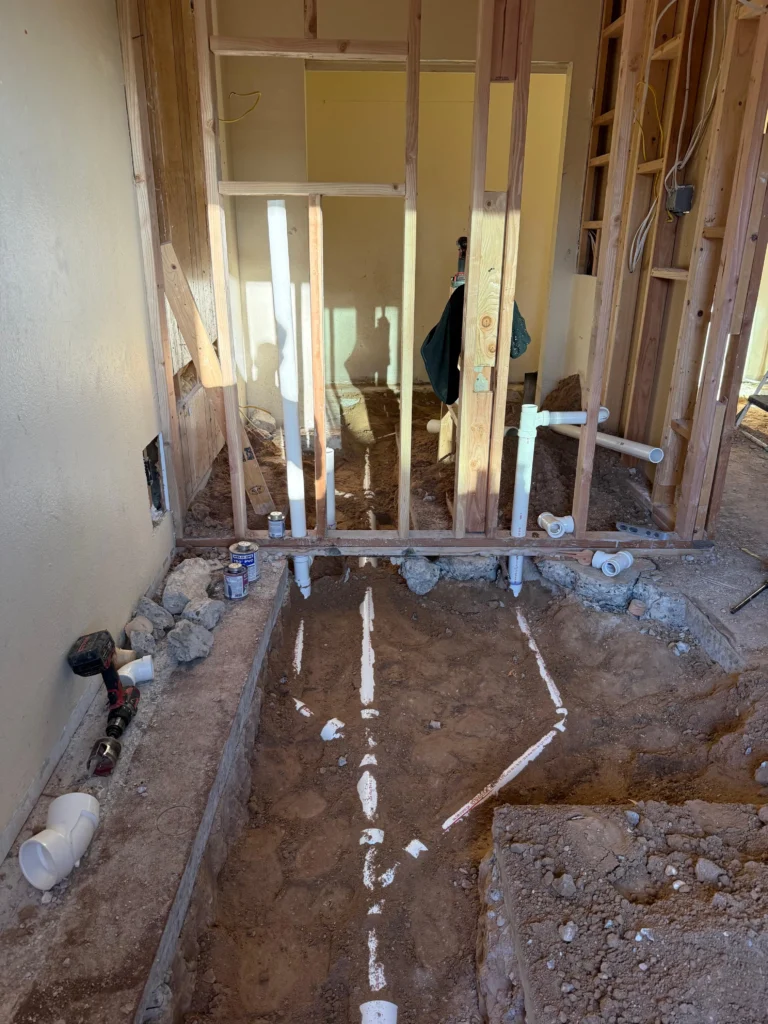
Galvanized pipe — that’s the older gray steel supply line a lot of Albuquerque homes still have, coated in zinc to keep it from rusting. That zinc coating wears off from the inside over the decades, and once it’s gone, the bare steel underneath starts rusting and scaling shut like a clogged artery. It doesn’t fail evenly. One section holds fine for years while the section next to it is already down to a trickle, which is exactly why patch repairs on galvanized systems feel like a losing game — you’re not fixing the pipe, you’re just fixing today’s weak spot.
Copper’s usually a better long-term bet, but even copper pinholes if the water running through it is on the acidic side, which parts of our water supply can be depending on the neighborhood and the age of the service line feeding the house. That shows up as tiny, almost invisible leaks — a damp spot on drywall, a little green-blue staining around a fitting — long before there’s an obvious puddle.
Old dielectric unions — the fitting that’s supposed to keep two different metals from corroding against each other where they connect — are another common culprit. Missing one, or having one installed wrong, speeds up corrosion right at the joint. We see this constantly in houses where a water heater got swapped at some point but nobody touched the original connections.
How We Actually Walk a Whole-Home Repipe Job
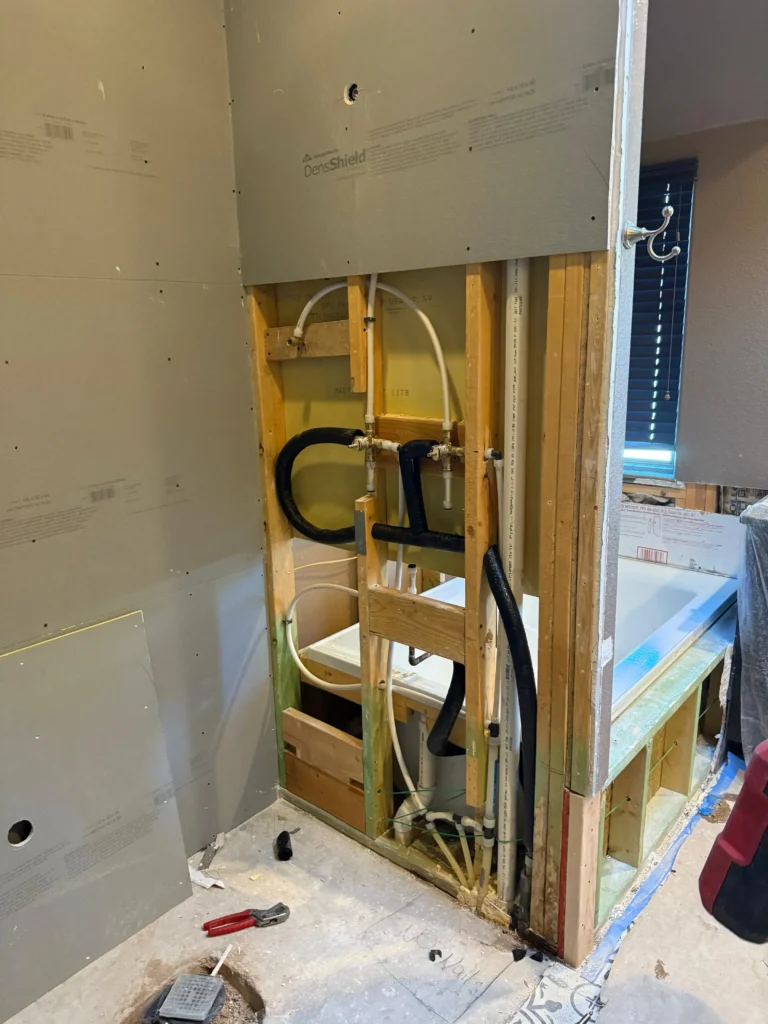
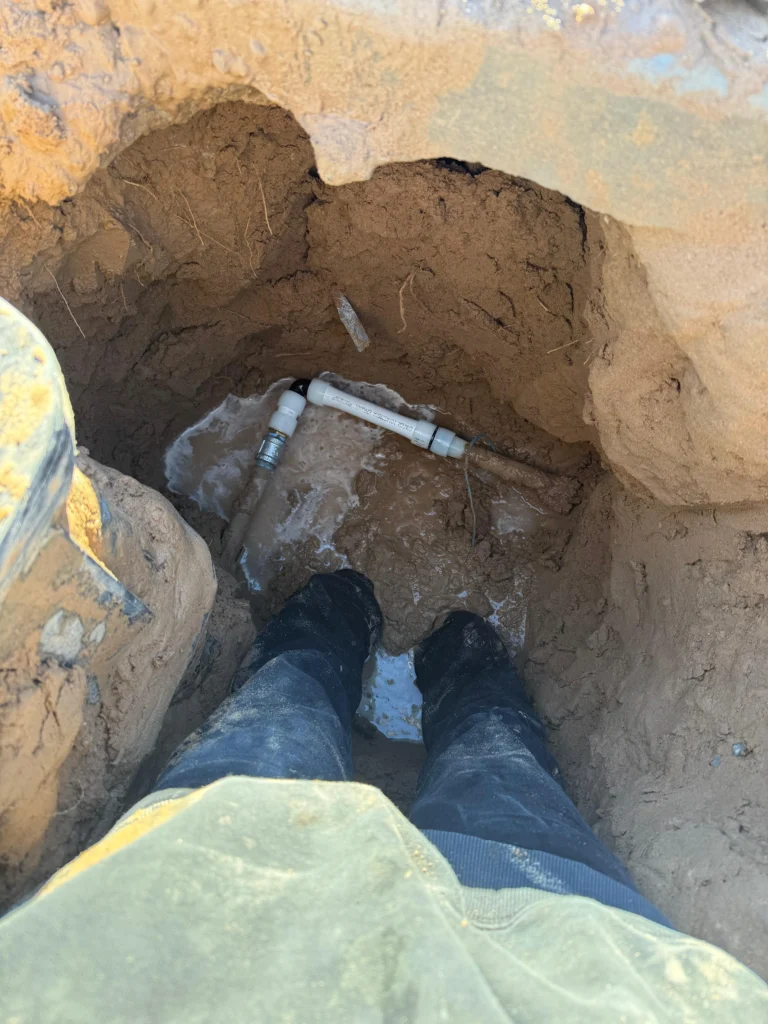
First thing we do is walk the house and figure out what’s actually running through your walls — galvanized, copper, or a mix, since a lot of homes got partially repiped at some point and nobody remembers where the line stops. We check what’s visible in the crawlspace, the garage, and under sinks, since that tells us more in ten minutes than a homeowner’s memory usually can.
From there we map a route — mostly PEX these days, run through the attic or crawlspace instead of tearing into every wall — and give you a real number before any cutting starts. Most whole-home jobs run one to two days, which surprises people. They picture their house torn apart for a week. With PEX routing, we’re usually opening a lot fewer walls than folks expect, because we’re not fishing rigid pipe through a stud bay the hard way anymore.
The mistake we see most: someone calls about “one more leak,” we patch it because that’s what they asked for, and six months later they’re calling about leak number four in a system that was never going to stop leaking. If your house is on galvanized and you’re past leak two, ask us straight whether a patch is really the right call — we’ll tell you the truth even if the answer’s “yeah, one more patch buys you time.”
Older sections of the North Valley and around Old Town still run a lot of original galvanized behind adobe and brick walls that are decades older than the pipe itself, and pulling new line through those walls is a different job than a stick-built house from the 90s out toward Rio Rancho. We plan for that difference before we ever open a wall, not after.
A Magnet and a Hose Bib Gauge Tell You More Than Guessing Will
Run the hot and cold in two or three different rooms and see if the rust color shows up in more than one place — that alone tells us a lot before we ever step on-site.
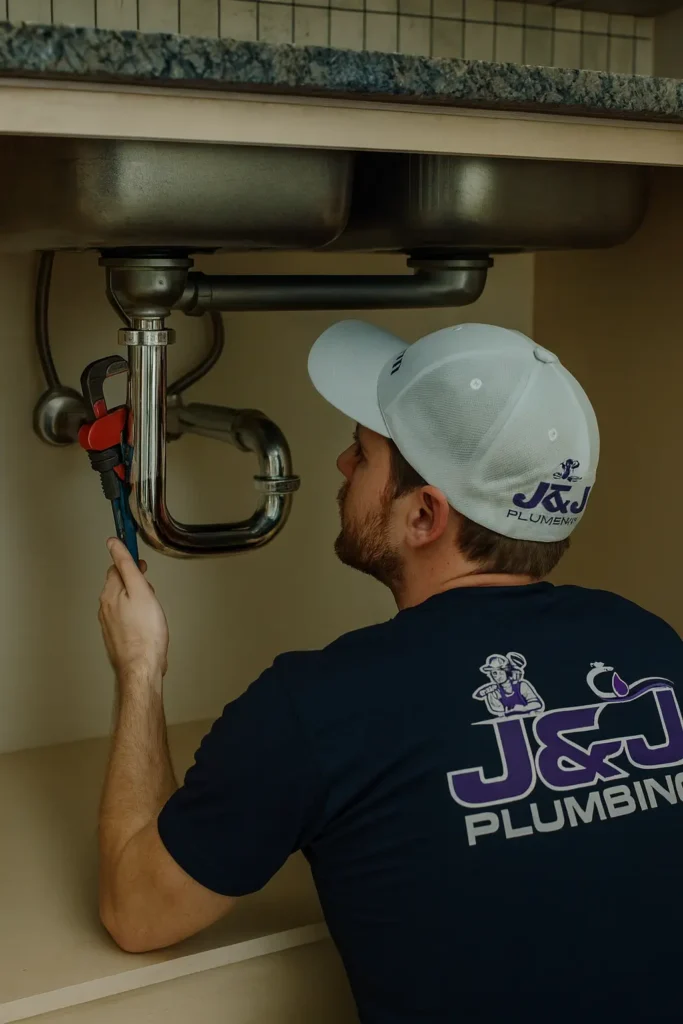
A magnet sticks to galvanized steel pipe and doesn’t stick to copper. If you’ve got a stretch of visible pipe in the garage or crawlspace, a fridge magnet will tell you what you’re dealing with in about five seconds.
If you’ve got an outdoor pressure gauge that screws onto a hose bib, a quick reading tells you whether your whole-house pressure’s actually low or whether it’s just one fixture acting up.
What’s not a DIY fix: cutting into a wall, tapping into an existing line, or working anywhere near a slab. Once you’re inside a wall or under a foundation, a mistake there costs a lot more than the repipe would have.
Patch the Leak or Repipe the House? A Straight Answer
One isolated leak, on a system that’s otherwise holding up fine, on pipe that isn’t galvanized — that’s usually just a Pipe Repair call, not a full repipe. No reason to replace a whole system over one bad fitting.
Multiple leaks in a year, rust showing up in more than one fixture, or a house that’s still running original galvanized from the 60s or 70s — that’s a repiping conversation, not another patch. We’ll tell you which category your house falls into instead of pushing whichever job pays more.
If you’ve had a slab leak, or you’re not sure whether what you’re dealing with is a supply line issue or something under the foundation, that’s a different diagnosis first — Leak Detection & Slab Leaks is the page for figuring out where the water’s actually going before anyone decides on a repipe.
Repiping doesn’t mean the whole house is without water for days. We isolate sections and work through the house in stages where we can, so you’re not living on bottled water for a week.
One thing worth being straight about: a repipe covers your water supply lines, not gas lines, and not moving fixtures to new spots in the house. If you’re mid-remodel and want the toilet moved to the other wall or a sink relocated, that’s a rough-in job layered on top of a repipe, not part of the base scope — we’ll price that separately and tell you upfront rather than let it show up as a surprise on the invoice.
Common Questions Before You Call
Repiping a House in Albuquerque: Cost, Timeline, Signs?
Expect roughly $7,500 on average, with a typical range of $1,500 to $15,000, and a few days to a week of work. Recurring leaks, rusty water, and low pressure at every tap are the main warning signs. Call J&J Plumbing LLC at (505) 589-6934 for a free quote.
How long does a whole-home repipe actually take?
Most houses run one to two days for the repiping itself, with a follow-up visit for drywall patching if walls needed to be opened. Bigger or older homes can run longer — we’ll give you a real estimate after we walk the house, not a generic number off a chart.
Will I be without water the whole time?
No. We work section by section and keep at least partial water service running through most of the job. There are short windows, usually a few hours at a time, where a specific section’s shut off while we’re working on it.
My house is near Old Town or Barelas and still has original plumbing — does that change the job?
Yes. Older homes near Old Town, Barelas, and older pockets of the South Valley often still have original galvanized behind adobe or brick, sometimes with venting or fittings that never got updated when other work was done over the years. We plan the route differently for those houses than for a newer build out on the Westside or in Rio Rancho, where everything’s usually already up to current code.
How much wall or ceiling repair is involved?
Less than most people expect, since PEX lets us route through attics and crawlspaces instead of opening every wall the pipe passes through. Where we do have to cut in, we patch the drywall before we leave — we don’t hand you a hole to deal with yourself.
Your Neighbors Already Trust the Fix
Trustindex verifies that the original source of the review is Google. Trustindex verifies that the original source of the review is Google. Trustindex verifies that the original source of the review is Google. Trustindex verifies that the original source of the review is Google. Trustindex verifies that the original source of the review is Google. Trustindex verifies that the original source of the review is Google. Trustindex verifies that the original source of the review is Google. Trustindex verifies that the original source of the review is Google. Trustindex verifies that the original source of the review is Google. Trustindex verifies that the original source of the review is Google. Ready to Stop Patching and Fix It for Good
Call J&J Plumbing and we’ll walk the house, tell you straight whether you’re looking at a patch or a full repipe, and give you a real number before anyone picks up a tool. We’ve handled this exact call in homes across Bernalillo County, from original galvanized near Old Town and Barelas to newer builds out toward Rio Rancho and the Westside.