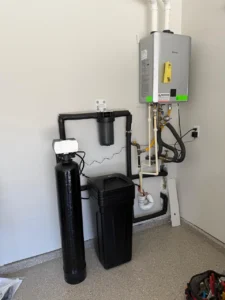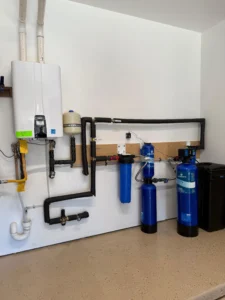
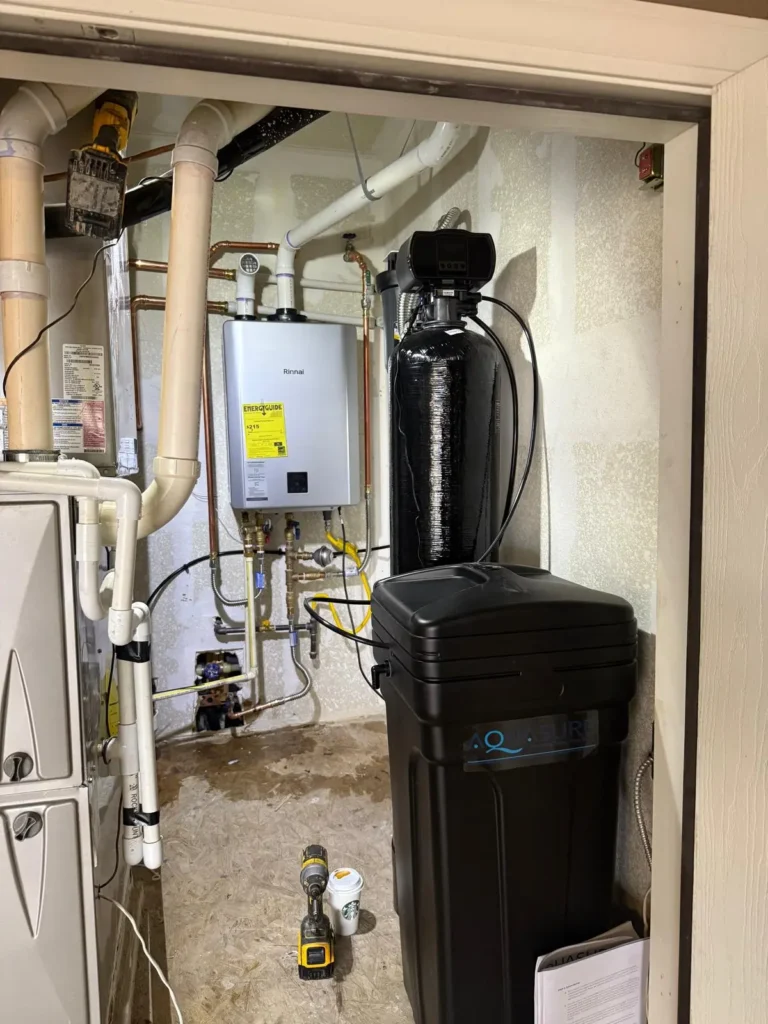
How long a water heater lasts in Albuquerque depends on its type, its age, and what is in our water. Tank heaters in homes with neglected maintenance often fail earlier than the averages suggest. This guide covers realistic lifespans, local factors, and the signs it is time to replace.
How Long Each Type Lasts
| Type | Typical lifespan | Notes |
|---|---|---|
| Tank (gas or electric) | 10 to 15 years per Energy.gov | Many installers say 8 to 12 |
| Tankless | About 20 years or more per Energy.gov | Needs regular descaling |
| Heat pump (hybrid) | 10 to 15 years per Energy.gov | Still has a tank |
Energy.gov puts storage heaters at 10 to 15 years and says most tankless units last more than 20 years, with replaceable parts that can extend that further. Manufacturers and installers often quote a shorter 8 to 12 years for tanks, which is more realistic in hard water. Treat the numbers as a range, not a promise.
What Shortens a Water Heater’s Life in Albuquerque
The Albuquerque Bernalillo County Water Utility Authority (ABCWUA) says its water runs from moderately hard to hard, depending on the source blend and your distribution zone. Minerals settle out as scale every time water is heated. In a tank, that scale collects at the bottom and traps heat, so the unit works harder. A. O. Smith says hard water also speeds corrosion and sediment buildup.
Other local factors matter too:
- High thermostat settings. ABCWUA says a thermostat set too high can worsen scaling.
- Skipped flushing. ABCWUA says many manufacturers recommend periodic flushing, and white particles in fixtures can be scale from the heater.
- Tankless scale. Navien recommends descaling at least once a year, and its method circulates cleaning solution for at least 45 minutes before flushing.
- Well water. ABCWUA’s numbers do not apply to private wells, so East Mountains homes should test their water.
- Freezing. Heaters or lines in unheated garages and exposed spaces face extra stress in winter.
The Anode Rod: A Cheap Part That Protects the Tank
Inside most tanks is a sacrificial anode rod. It corrodes so the steel tank does not. Once it is used up, the tank itself starts to rust.
Guidance on timing varies. Many sources say to inspect it every 1 to 2 years and replace it every 3 to 5 years. Some contractors say hard water homes may need replacement every 2 to 3 years. One contractor also notes that softened water can wear rods faster, so inspect yearly if you have a softener. Your manual has the manufacturer’s schedule, and skipping it can affect warranty coverage.
Wondering How Much Life Your Heater Has Left?
Get upfront pricing before any work starts. Same-day appointments available.
A Maintenance Schedule That Adds Years
A. O. Smith recommends yearly care and says hard water areas may need more frequent flushing. Use this checklist:
- Flush the tank at least once a year. Our water heater maintenance and flushing service clears sediment before it hardens.
- Test the T&P valve once a year. It is a key safety part.
- Inspect the anode rod. Check it every 1 to 2 years, sooner in hard water.
- Descale a tankless unit at least yearly. Follow the manufacturer’s steps, or hire a pro.
- Check the thermostat. Do not set it higher than you need.
- Look for moisture. Check the base and fittings each time you flush.
- Consider treating the water. A water softener slows scale for the heater and the rest of the house.
Signs Your Heater Is Near the End
- Water pooling at the tank base or leaking from the tank body. A leak from the tank means replacement.
- Rust-colored hot water.
- Loud popping or rumbling from sediment.
- Hot water that runs out faster or takes longer to heat.
- A tank over 10 years old with repair bills adding up.
If you see a leak, see our guide to what to do right now. Our emergency plumbing team is available 24/7. For smaller problems, our water heater repair team can diagnose first.
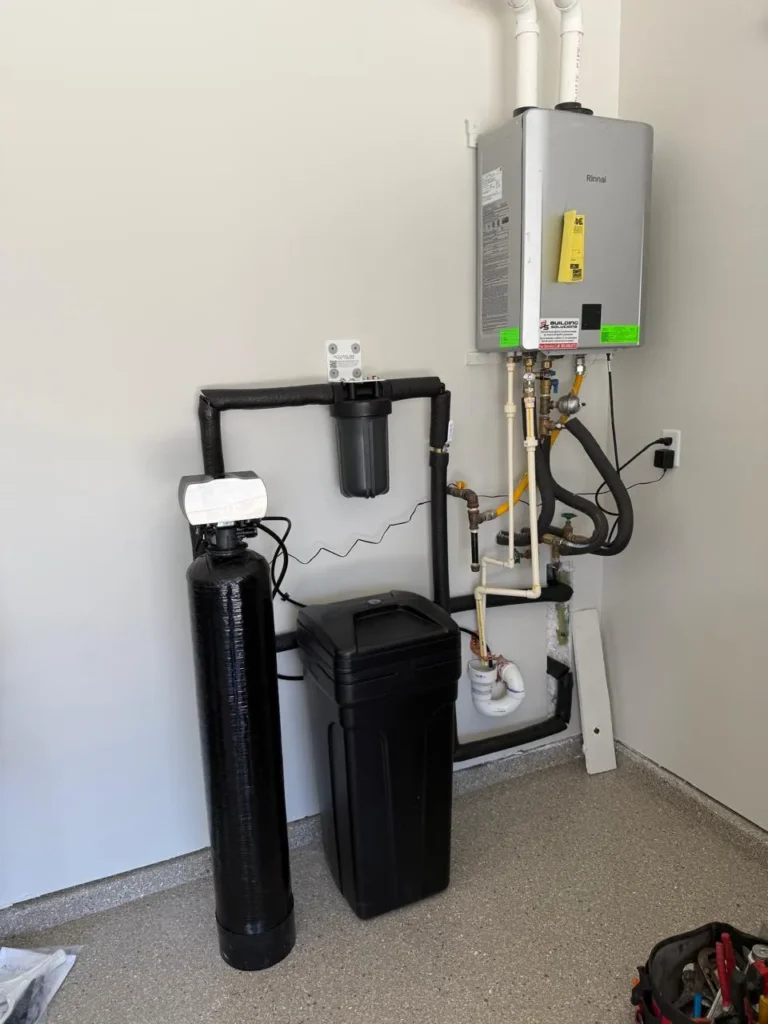
Repair or Replace: Costs and Local Rules
Angi puts the national average repair at about $616, and NerdWallet lists tank replacement at about $600 to $2,500 installed, with tankless at about $1,400 to $3,900. Prices vary by home, and quotes are free.
A common rule of thumb is to replace when the unit is past 10 years and the repair costs close to half of a new heater. If the tank is leaking or rusting, replace it.
Replacement has local rules. The City of Albuquerque says installing a water heater requires a plumbing/mechanical permit, and only a licensed contractor can do the work. New Mexico charges gross receipts tax instead of sales tax, and it can appear on invoices. Ask whether your quote includes both. Our water heater replacement service covers the swap.
New Mexico Gas Company (NMGC) expanded its efficiency program in July 2026, with rebates of up to $500 for qualifying gas water heaters. Rules include using an NMGC participating contractor and, for some models, ENERGY STAR certification. Ask your plumber whether they participate.
Mistakes to Avoid and What to Ask Your Plumber
Common mistakes:
- Never flushing the tank.
- Ignoring a small drip or rusty water.
- Setting the thermostat higher than needed.
- Skipping the anode rod check.
- Waiting for a failure instead of planning a replacement.
- Skipping the permit.
Ask your plumber:
- How old is my heater, and what is its condition?
- Is a flush or anode rod check worth it now?
- Should I repair or replace, and what does each cost?
- Does the quote include the permit, removal, parts, and gross receipts tax?
- Would a softener help the next heater last longer?
We serve homes across the metro. See our service areas.
Frequently Asked Questions
How long does a water heater last?
Energy.gov says storage heaters last 10 to 15 years and tankless units more than 20. Many installers quote 8 to 12 years for tanks, which is more realistic in hard water.
Does hard water shorten a water heater’s life?
Yes. A. O. Smith says hard water speeds corrosion and sediment buildup. ABCWUA says Albuquerque water is moderately hard to hard, so flushing matters.
How often should I flush my water heater?
At least once a year, and more often in hard water, according to A. O. Smith. Follow your manual.
How do I know if my water heater is failing?
Look for leaks at the tank, rusty hot water, loud rumbling, and rising repair bills. A leak from the tank means it must be replaced.
Do I need a permit to replace a water heater?
Yes. The City of Albuquerque requires a plumbing/mechanical permit, and a licensed contractor must do the work.
Is Your Albuquerque Water Heater Near the End? Call J&J Plumbing LLC
Locally owned and licensed in New Mexico, with 24/7 emergency availability across Albuquerque.