Sewer Line Repair & Replacement in Albuquerque, NM
A sewer line problem doesn’t look like much at first — a slow drain, a gurgle, maybe a bad smell near a cleanout in the yard. By the time it’s obvious, the line’s usually been struggling for a while. We find out what’s actually happening underground before we recommend anything, and we’ll tell you straight if it’s a spot repair or if the line needs full replacement — not the more expensive option by default.
Your Trusted Plumbing & Water Heater Experts in Albuquerque
Locally owned & operated in Albuquerque | Licensed in New Mexico | 24/7 emergency availability | 24+ 5-star reviews


 Trustindex verifies that the original source of the review is Google.
 Trustindex verifies that the original source of the review is Google.
 Trustindex verifies that the original source of the review is Google.
 Trustindex verifies that the original source of the review is Google.
 Trustindex verifies that the original source of the review is Google.
 Trustindex verifies that the original source of the review is Google.
 Trustindex verifies that the original source of the review is Google.
 Trustindex verifies that the original source of the review is Google.
 Trustindex verifies that the original source of the review is Google.
 Trustindex verifies that the original source of the review is Google.
Get Free Estimate Now
What Do You Need?
Why Homeowners Call Us First
We Already Know What’s Wearing Out Your Line
Albuquerque’s clay-heavy soil and decades-old sewer laterals don’t give you much warning — a slow drain here, a gurgle there — before something underground actually fails. We check the line itself, not just the symptom, on every call.
We show up when we say we will.
Same-day service, a real time window, a text when we’re on the way.
Upfront pricing before any work starts.
You’ll know the cost — repair or replacement — before we touch anything.
Licensed & background-checked.
No stranger guessing their way through your yard or your home.
Where Your Line Actually Runs — And Where Our Job Starts
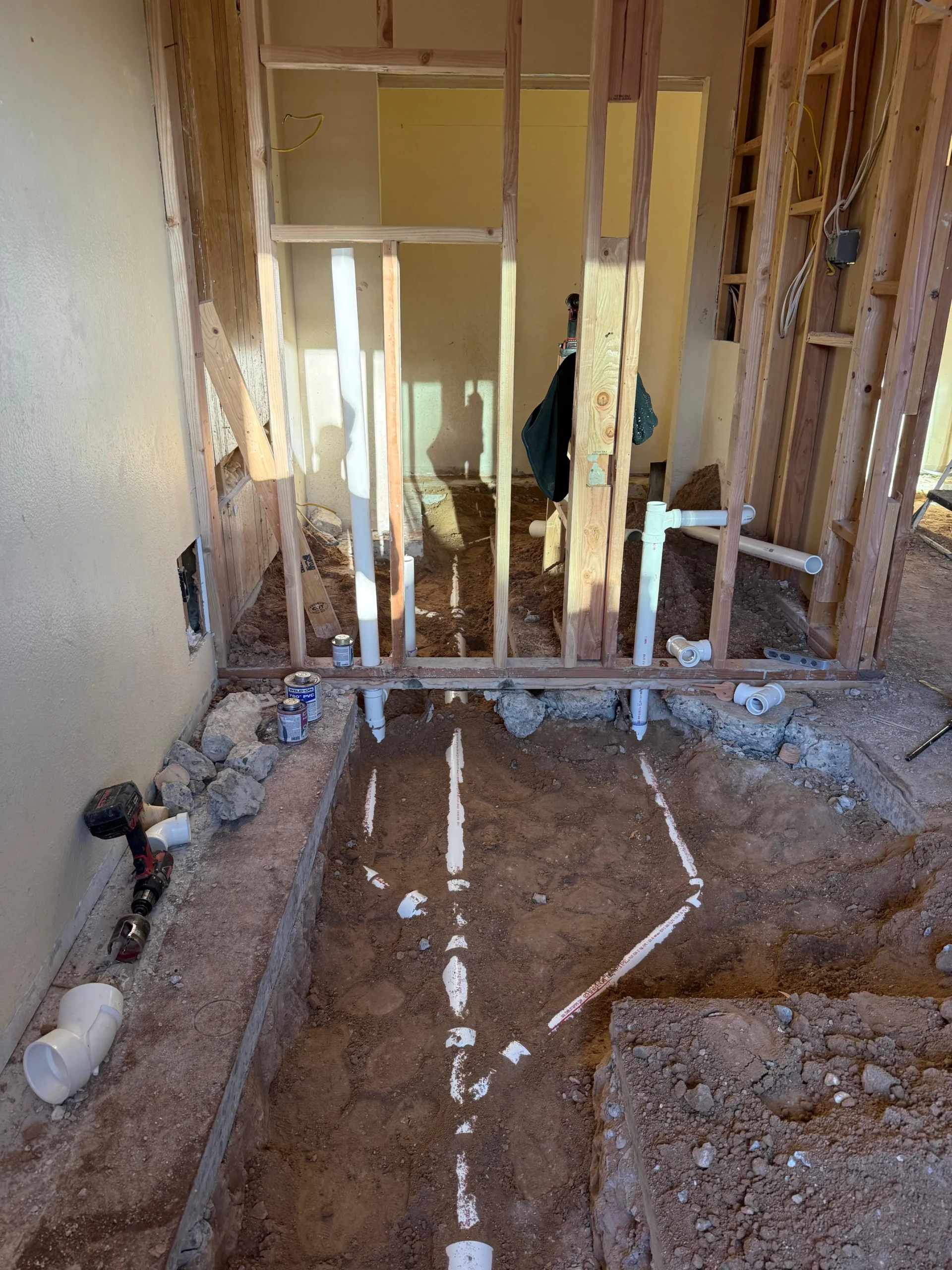
Every house has a sewer lateral — the pipe running from your home out to the city’s main sewer line under the street. Most people never think about it until it stops working, but it’s worth knowing this: the cleanout, usually a capped pipe sticking up somewhere in the yard near the house, marks roughly where the homeowner’s responsibility for that line begins. Everything from the house to that point, and often a section beyond it depending on the property, is yours to maintain. The city typically takes over from the property line to the main. When we’re diagnosing a problem, figuring out which side of that boundary it’s on is one of the first things we sort out, since it changes who’s responsible for the fix.
What Actually Damages a Sewer Line
Root intrusion — the most common cause we see. Roots don’t grow toward pipes on purpose, but they grow toward moisture, and a sewer line with even a hairline crack or a slightly separated joint is exactly what a thirsty root system is looking for. Once roots get a foothold inside a line, they don’t stop — they keep growing, widening the crack, and eventually choke the pipe’s flow almost entirely.
Pipe material breaking down with age — older clay and cast iron laterals, common throughout parts of Old Town, Barelas, and North Valley, were built with more joints than modern pipe, and every joint is a potential weak point decades later. Orangeburg pipe, used in some mid-century construction, is a different failure mode entirely — it doesn’t crack so much as it delaminates and collapses under the weight of the soil around it over time.
Ground movement — clay-heavy soil common in this region expands and contracts with moisture changes, and that slow movement over years can shift a buried line out of level, creating a low spot where waste collects instead of flowing through.
Bellied pipe — a section that’s sunk lower than the rest of the line, whether from ground movement or age, creating a standing pool inside the pipe that collects debris and eventually blocks flow.
Physical damage — tree planting, fence post digging, or other yard work that didn’t account for where the line actually runs.
How We Actually Diagnose It — Not Guesswork
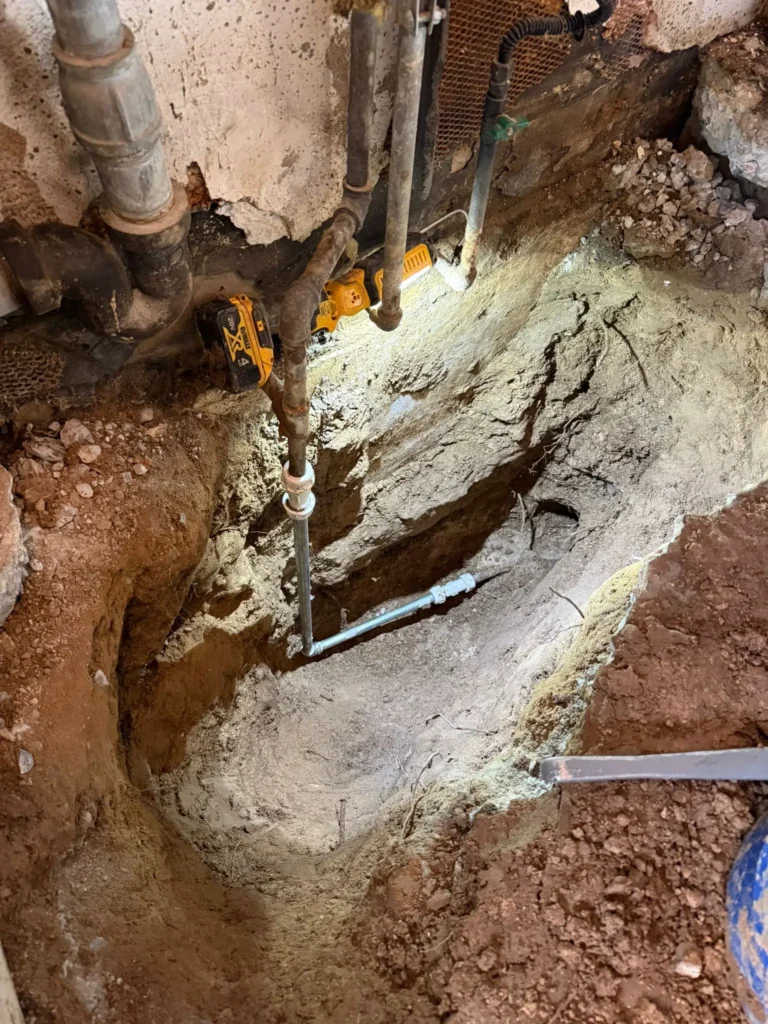
We don’t recommend digging up a yard based on a guess. A sewer camera inspection means running a flexible camera down the line to see exactly what’s going on — root intrusion, a cracked joint, a bellied section, a full collapse — and exactly where it is. That last part matters as much as the diagnosis itself: knowing the problem is 40 feet out and 3 feet down means a targeted repair instead of tearing up an entire yard.
This is also how we tell the difference between “this needs a repair” and “this needs full replacement” — a diagnosis, not a default recommendation either direction.
Repair, or Does the Whole Line Need Replacing?
A single damaged section — one bad joint, one root intrusion point — is usually a targeted repair, sometimes without digging up the whole yard at all, depending on the method. A line with damage in multiple places, an older material that’s failing throughout its length rather than at one spot, or a full collapse is a replacement conversation, not a repair one.
Trenchless replacement is worth knowing about here: for a lot of situations, we can replace a damaged line by pulling a new pipe through the old one’s path rather than digging a full trench the entire distance. It’s not right for every situation — depends on the ground, the access, and the extent of the damage — but where it applies, it means significantly less yard disruption than the traditional dig-the-whole-thing-up approach people expect.
Older Home Near Old Town, Barelas, or Downtown? The Line’s Probably Original.
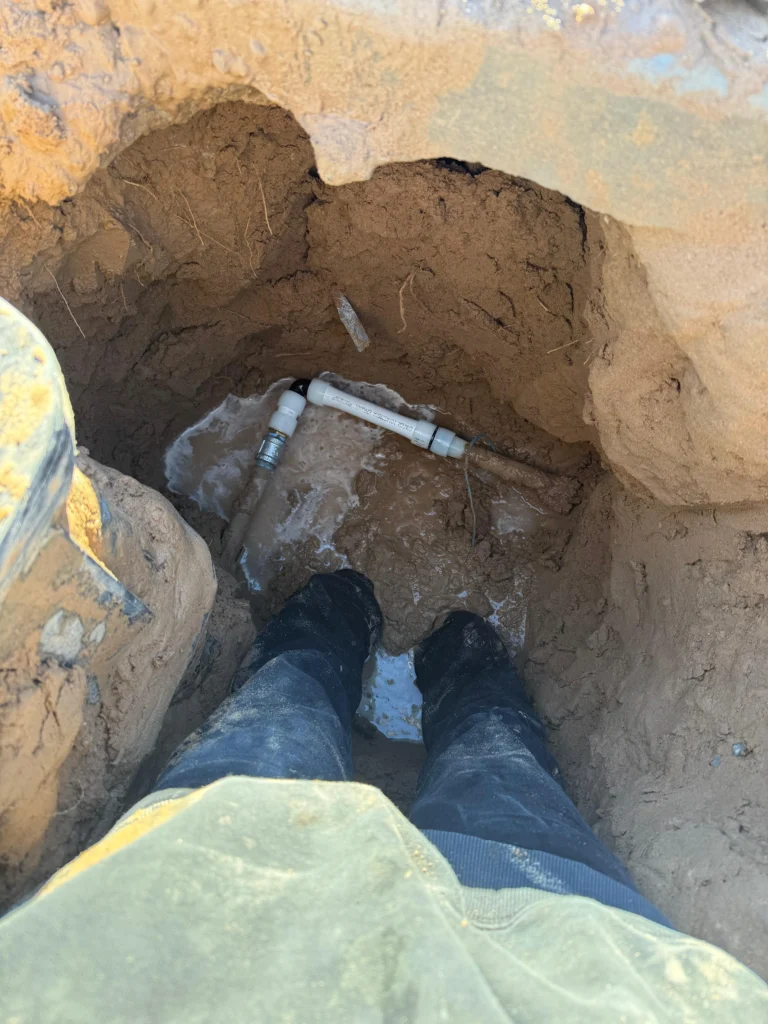
A lot of the sewer laterals under homes in these older parts of the city are original to the house — meaning if the home was built 50, 60, 70 years ago, so was the pipe underground. Clay pipe with a lot of joints, or in some cases Orangeburg, both of which are well past the point where age alone becomes a real factor even without any specific damage yet. When we’re called out to one of these homes, age of the line itself is part of what we’re evaluating, not just whatever symptom brought us out.
Compare that to newer construction out toward Rio Rancho and the Westside, where PVC laterals are standard and root intrusion is a much less common cause — when something goes wrong there, it’s more often physical damage or a poorly made joint from installation than decades of natural wear.
North Valley and Mature Trees — A Recurring Pattern
North Valley has some of the oldest, largest trees in the metro, which is part of what makes it such a distinct part of the city — but mature root systems and old clay sewer lines are not a good combination over a long enough timeline. If you’re in an older North Valley home with big trees near the sewer line’s path, root intrusion is genuinely one of the more common calls we get from that specific area.
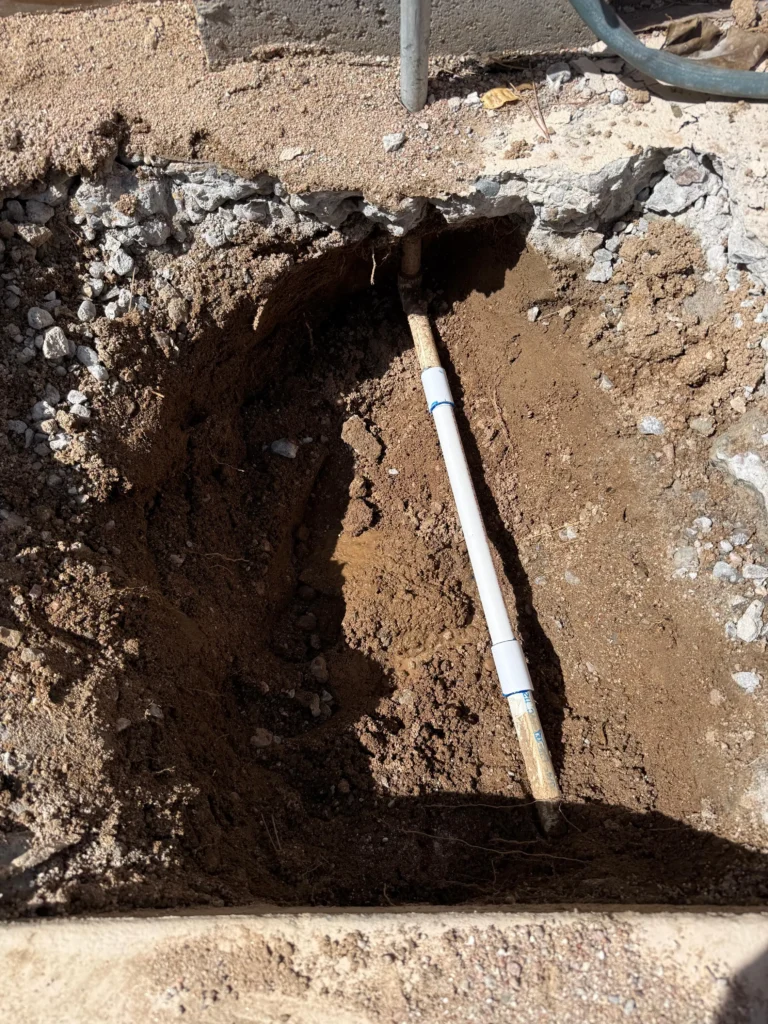
Sewage Disposal and Backups
When a line’s blocked badly enough, sewage can back up into the house rather than out to the street — through a floor drain, a tub, or the lowest fixture in the home. This is different from a slow drain; it’s a health and property issue that needs same-day attention.
Simple Things to Check Before You Call
If multiple drains in the house are slow or backing up at the same time, that points toward the main line, not an individual fixture — worth mentioning when you call, it changes what we bring.
Check the yard near any visible cleanout for wet spots, unusually green grass in one patch, or a sewage smell — small outdoor signs sometimes show up before the indoor symptoms get bad.
Past that, this isn’t a DIY area. A sewer line problem below the surface needs a camera and a professional diagnosis — guessing wrong here means digging in the wrong spot.
Backing Up Into the House Right Now?
That’s not something to wait on.
Frequently Asked Questions
How do I know if it’s a drain clog or an actual sewer line problem?
If it’s one fixture, it’s usually a simple drain issue. If multiple drains are slow or backing up together, or if there’s a smell or wet spot in the yard, that points toward the sewer line itself.
Do I have to replace my whole yard’s landscaping for a sewer repair?
Not always — trenchless methods can avoid digging the full length of the line in a lot of cases, though it depends on the specific damage and site conditions.
How much does root intrusion actually cost to fix?
Depends on severity and location — a single intrusion point is a different job than roots that have spread through several sections of an older clay line.
Are older homes near Old Town or Barelas more likely to need this?
Often yes, simply because of the age and material of the original sewer lateral, not because of anything the homeowner did.
What if I’m on septic instead of city sewer?
That’s a different system with its own maintenance — see our septic system services rather than sewer line repair specifically.
Get an Honest Diagnosis
We’ll look at what’s actually happening underground before recommending anything, and you’ll know the real scope — repair or replacement — before any work starts.
CTA: Get a Free Quote | Call Now: (505) 589 6934
Your Neighbors Already Trust the Fix
Trustindex verifies that the original source of the review is Google. Trustindex verifies that the original source of the review is Google. Trustindex verifies that the original source of the review is Google. Trustindex verifies that the original source of the review is Google. Trustindex verifies that the original source of the review is Google. Trustindex verifies that the original source of the review is Google. Trustindex verifies that the original source of the review is Google. Trustindex verifies that the original source of the review is Google. Trustindex verifies that the original source of the review is Google. Trustindex verifies that the original source of the review is Google. Get Your Sewer Problems Fixed in Albuquerque — Today
Stop putting up with slow drains and backups. Get a free quote in minutes, or call now for same-day service.