Electric Water Heater Repair & Installation in Albuquerque, NM
Your electric water heater’s tripping the breaker, running lukewarm, or just quit heating altogether, and you want someone who actually tests it instead of guessing. Electric tanks fail differently than gas ones — it’s almost always an element, a thermostat, or something happening back at the panel — and diagnosing it right the first time is part of the water heater services Jonathan and the crew handle across Albuquerque every week. We can usually tell you what’s wrong same day, and if it’s a repair, most jobs are done before dinner.
Your Water Heater Experts in Albuquerque
Locally owned & operated in Albuquerque | Licensed in New Mexico | 24/7 emergency availability | 24+ 5-star reviews
EXCELLENT Based on 39 reviews
 Posted on Google
 Nadine EnciniasI had the best experience when I called J&J plumbing. Jonathan came out the same morning I called. The work was fast, efficient, affordable and he helped me when I needed it the most!!! I definitely recommend them for all your plumbing needs. Thank you ❤Posted on Google
 Roxanne AragonJ&J answered immediately and was able to service my plumbing emergency immediately. Jonathan was professional and trustworthy. I will be calling J&J for all future plumbing needs.Posted on Google
 Jojo AragonHad a plumbing emergency and he was able to get to us right away. Honest, reliable and affordable. Will be calling him in the future for all plumbing work going forward.Posted on Google
 Bon LasJohnathan was Professional, Fast & Efficient Fixed our plumbing leak with the quickness! Highly recommend.Posted on Google
 jodi colchamiroJonathan was very efficient and communicative. He has good diagnostic skills and is a skilled independent plumber. I would highly recommend his services.Posted on Google
 Yevette LuceroWe had J & J plumbing come out and replace our broken kitchen faucet . What impressed me was when I called he actually answered, instead of me having to leave a message and wait for a call back. Jonathan went above and beyond on our service call he got us scheduled same day and did an awesome job. I would highly recommend this company for any and all of your plumbing needs.Posted on Google
 Cesar PinedoAfter calling big name companies they wanted to schedule us out days for an emergency plumbing issue. We called j&j plumbing and was answered by Jonathan who is very professional and came to fix our issue right away.Posted on Google
 Yahir EnriquezGood job came quick and fixed are problemPosted on Google
 Luana VigilJ&J did a great job repairing/installing a kitchen faucet and outside spigot for us. They were on time and completed the work quickly and everything works perfectly!Posted on Google
 Judith Zubiagreat & fast service! we had a running toilet and they came out and fixed the issue quickly! thank you so much! 100% recommend!Verified by TrustindexTrustindex verified badge is the Universal Symbol of Trust. Only the greatest companies can get the verified badge who has a review score above 4.5, based on customer reviews over the past 12 months. Read more
Get Free Estimate Now
Breaker Keeps Tripping? That’s Usually One of Two Things
If the breaker trips the second you reset it, that’s almost always a shorted heating element or a wiring problem, not the breaker itself being weak.
Water’s Lukewarm and Never Gets Hot
Usually means one of your two heating elements has failed — most electric tanks run an upper and lower element, and if the lower one’s dead, you’re only getting whatever heat the top element manages before the hot water runs out.
You Get a Few Minutes of Hot Water, Then It’s Gone
Different problem than lukewarm-only — this usually points to the lower element specifically, since that’s the one doing most of the work once the top of the tank cools.
Popping, Sizzling, or a Rumbling Sound When It Runs
That’s sediment sitting on top of the lower element, and it’ll shorten the element’s life fast if it’s not dealt with.
Burning Smell Near the Tank or the Panel
Stop and call us. That’s not a wait-and-see symptom — a burning smell near a water heater circuit can mean a wire connection has overheated, and that’s a real fire risk, not just an inconvenience. This is the one situation on this page where you shouldn’t wait for a scheduled visit — treat it as an emergency plumbing call and get the power shut off at the breaker until we get there.
What’s Actually Going Wrong Inside the Tank
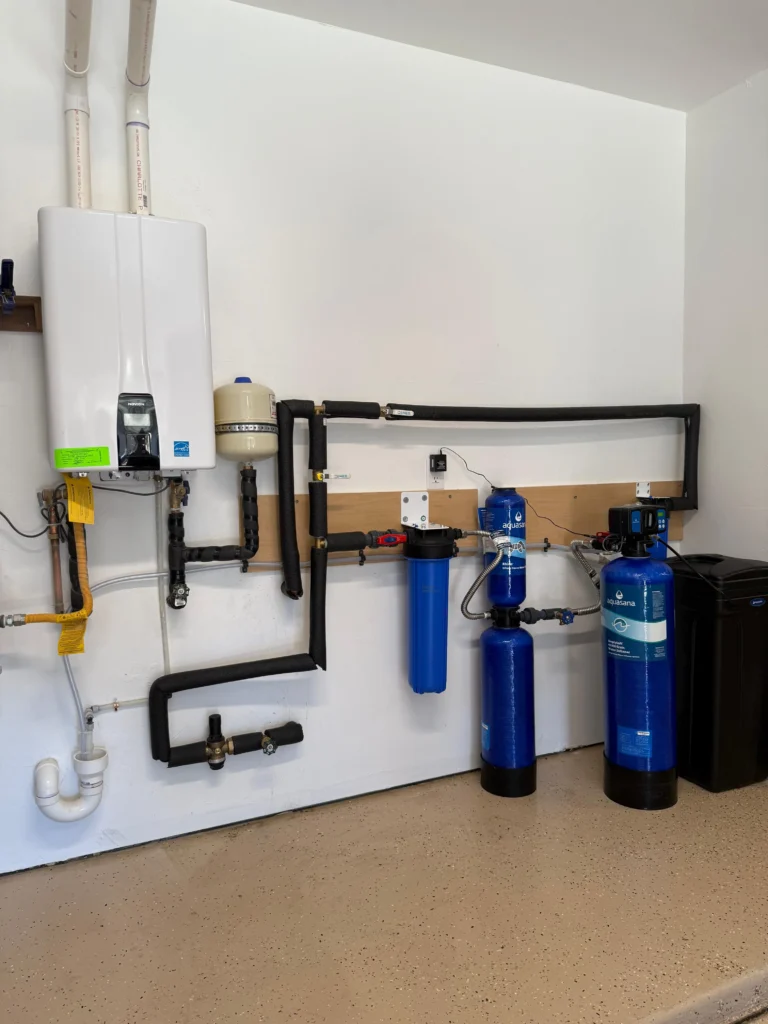
Electric tanks run on two heating elements — upper and lower — each controlled by its own thermostat. When one element burns out, which happens most often to the lower one since it’s submerged and working the hardest, you lose most of your hot water even though the tank still technically “works.”
There’s also a high-limit switch — a safety reset button sitting right above the upper thermostat — that trips and cuts power to the whole tank if the water gets too hot. Homeowners sometimes reset that button over and over without figuring out why it tripped in the first place, and that’s how a fixable problem turns into a burned-out element or worse.
Wire connections matter more than people expect too. The lugs where the circuit wires attach to the elements and thermostats can loosen or corrode over years of heating and cooling, and a loose connection creates resistance, which creates heat, which is exactly how you end up with that burning smell we mentioned above. It’s a small thing to check, but it’s one of the first things we look at on any electric tank that’s acting up.
Sediment plays a role here too, same as with gas tanks — Albuquerque’s hard water leaves mineral buildup inside the tank, and when that scale coats the lower element, the element has to work harder and heats unevenly, which is exactly what burns them out early.
And then there’s the electrical side of it. A lot of older homes — especially closer to Old Town and Barelas — were built with 60 or 100 amp panels that were never sized with a modern electric water heater in mind. Add a water heater circuit to a panel that’s already carrying central air and everything else, and you start seeing nuisance trips that have nothing to do with the tank itself.
What We Actually Check When We Show Up
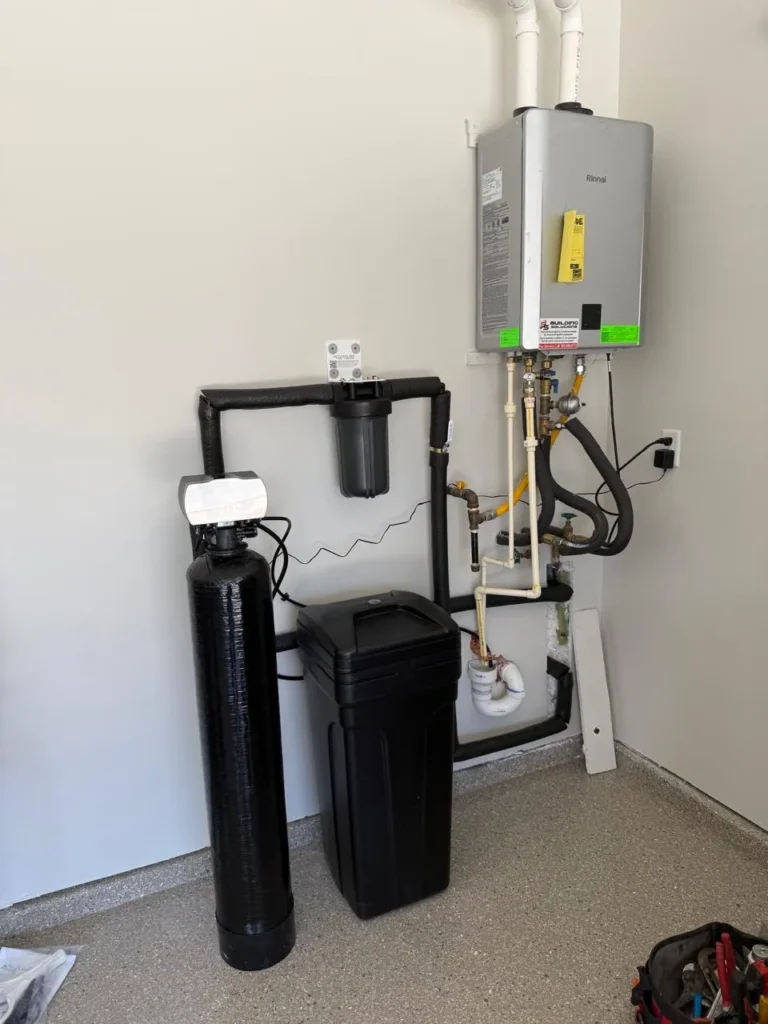
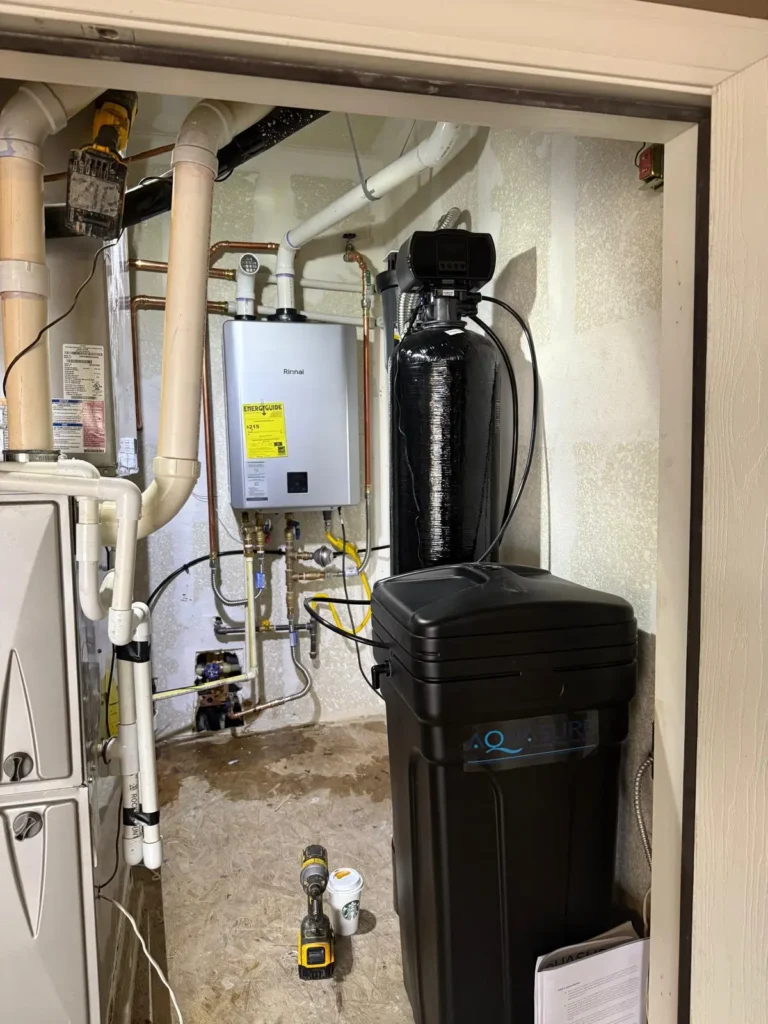
We start with a multimeter on both elements — that tells us in a couple minutes whether an element’s actually dead or whether we’re chasing something else. We check both thermostats, since a miscalibrated thermostat can mimic a bad element and send someone down the wrong repair path entirely. We check the wire connections in the junction box on top of the tank too — loose or corroded connections there cause more electric water heater “mystery” problems than people realize.
The mistake we see constantly: someone resets the breaker or the high-limit switch three or four times over a couple weeks instead of calling, and by the time we get there, what would’ve been a $200 element swap has turned into a full tank replacement because the element failure took the thermostat down with it.
What surprises most people is how often it’s genuinely just one part — one element, one thermostat — and not the whole unit. We’re not going to sell you a new tank when a $200 fix solves it.
On the flip side, homes out toward Rio Rancho and the Westside more often run all-electric from the start, since a lot of that newer construction skipped gas lines entirely. Those panels are usually already sized correctly for the water heater circuit, so the fix is almost always inside the tank itself rather than back at the panel — a more straightforward job than what we run into in some of the older housing stock closer in.
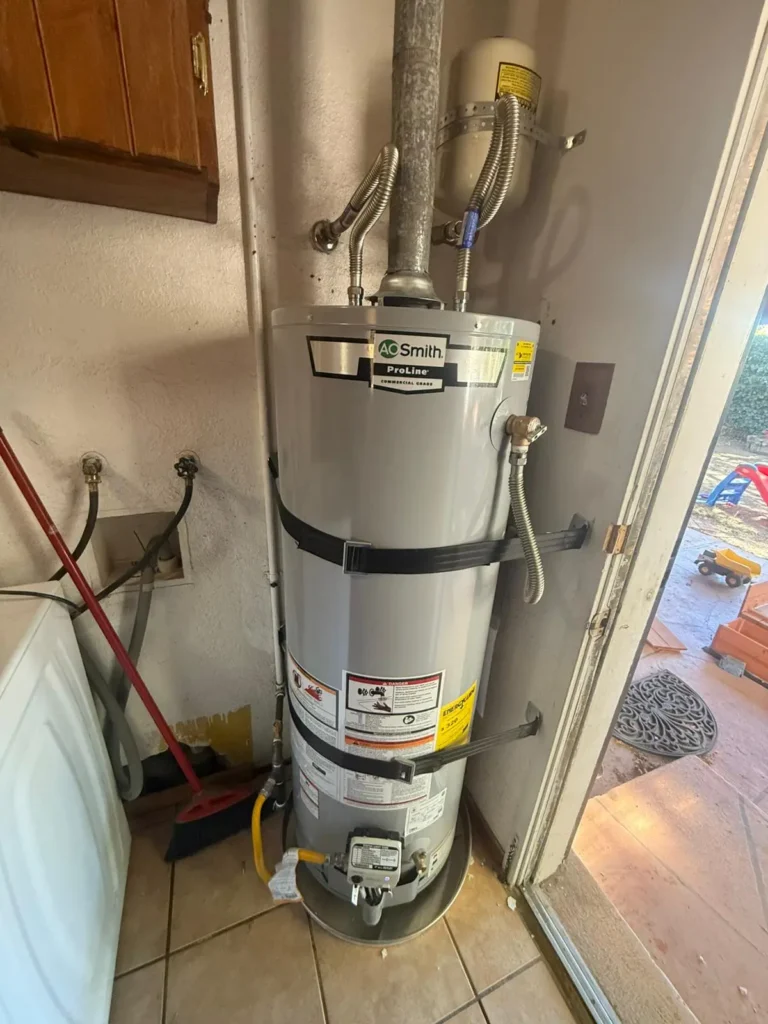
Two Things to Check Before You Call
Check the breaker first, and check the high-limit reset button — it’s the small red button sitting right on the upper thermostat, usually behind a metal access panel. You can reset it once. If it trips again right away, stop and call us instead of resetting it repeatedly.
Past that, don’t open up the tank yourself. These run on a 240-volt circuit, and testing elements or thermostats without shutting off power at the panel first is genuinely dangerous — this isn’t a DIY fix once you’re past the reset button.
Repair It or Replace It? Here’s the Honest Line
If it’s one element or a thermostat and the tank’s under 8 years old, repair makes sense and we’ll say so straight up. If you’re looking at a second element failure, a tank that’s already past 10-12 years, or a panel that genuinely can’t support the circuit without an upgrade, that’s when we’ll walk you through Water Heater Replacement instead — including whether it’s worth sizing up while we’re already in there. Panel upgrades themselves fall outside what a plumber handles, so if that’s genuinely what’s needed, we’ll tell you straight and point you to an electrician rather than pretend it’s something we can fix from the water heater side.
If hard water’s part of why the element failed early, that’s also worth a look — a water softener cuts down the scale buildup that shortens element life in the first place, especially in older neighborhoods like the South Valley where original galvanized lines are still common feeding into these tanks.
Will I Be Without Hot Water All Day?
No. Element and thermostat repairs are usually a same-day fix, often done within a couple hours once we’ve diagnosed it. Full replacements take longer but we’re still talking one day, not a multi-day project.
Is This Going to Be Messy or Tear Into My Walls?
No. Everything we’re checking and replacing is inside the tank itself or in the junction box on top — we’re not opening up walls or running new circuits unless the panel genuinely needs an upgrade, and we’ll always tell you that upfront before any work starts.
Common Questions Before You Call
Why does my electric water heater keep tripping the breaker?
Almost always a failed element shorting out, or occasionally a wiring issue at the panel — either way, it’s worth diagnosing rather than just resetting it.
Is it cheaper to repair or replace an electric water heater?
Usually cheaper to repair if it’s one part and the tank’s still reasonably young. We’ll give you both numbers when it’s a real toss-up so you’re not guessing.
Do all-electric homes near Nob Hill or older parts of town need anything different?
Sometimes. Homes closer to Central Avenue and older parts of the city, including blocks near the Old Town Plaza, were often wired decades before electric water heaters were standard, so we check panel capacity as part of any repair or install — newer construction usually doesn’t need that extra step.
Can I get pricing before you start any work?
Yes. We’ll tell you what we found and what it costs before we touch anything.
Your Neighbors Already Trust the Fix
EXCELLENTBased on 39 reviewsPosted on GoogleNadine EnciniasI had the best experience when I called J&J plumbing. Jonathan came out the same morning I called. The work was fast, efficient, affordable and he helped me when I needed it the most!!! I definitely recommend them for all your plumbing needs. Thank you ❤Posted on GoogleRoxanne AragonJ&J answered immediately and was able to service my plumbing emergency immediately. Jonathan was professional and trustworthy. I will be calling J&J for all future plumbing needs.Posted on GoogleJojo AragonHad a plumbing emergency and he was able to get to us right away. Honest, reliable and affordable. Will be calling him in the future for all plumbing work going forward.Posted on GoogleBon LasJohnathan was Professional, Fast & Efficient Fixed our plumbing leak with the quickness! Highly recommend.Posted on Googlejodi colchamiroJonathan was very efficient and communicative. He has good diagnostic skills and is a skilled independent plumber. I would highly recommend his services.Posted on GoogleYevette LuceroWe had J & J plumbing come out and replace our broken kitchen faucet . What impressed me was when I called he actually answered, instead of me having to leave a message and wait for a call back. Jonathan went above and beyond on our service call he got us scheduled same day and did an awesome job. I would highly recommend this company for any and all of your plumbing needs.Posted on GoogleCesar PinedoAfter calling big name companies they wanted to schedule us out days for an emergency plumbing issue. We called j&j plumbing and was answered by Jonathan who is very professional and came to fix our issue right away.Posted on GoogleYahir EnriquezGood job came quick and fixed are problemPosted on GoogleLuana VigilJ&J did a great job repairing/installing a kitchen faucet and outside spigot for us. They were on time and completed the work quickly and everything works perfectly!Posted on GoogleJudith Zubiagreat & fast service! we had a running toilet and they came out and fixed the issue quickly! thank you so much! 100% recommend!Verified by TrustindexTrustindex verified badge is the Universal Symbol of Trust. Only the greatest companies can get the verified badge who has a review score above 4.5, based on customer reviews over the past 12 months. Read more
Ready to Get Your Hot Water Back
Call J&J Plumbing and we’ll get someone out to test it, tell you straight what’s wrong, and get it fixed — usually the same day. We’ve worked on these tanks in homes all over Bernalillo County, from older wiring near Old Town and Barelas to newer all-electric builds out toward Westside and Rio Rancho.