
Whole-House Filtration Systems in Albuquerque, NM
If your water tastes or smells like chlorine, runs cloudy more often than it should, or you just want cleaner water at every tap without babysitting a pitcher filter, a whole-house system handles that at the source. It’s a different job from softening — filtration deals with sediment, chlorine, and taste, not hardness minerals — and it’s one of the water softener and filtration jobs Jonathan and the crew install across Albuquerque regularly, usually finished in a single visit.
Your Water Heater Experts in Albuquerque
Locally owned & operated in Albuquerque | Licensed in New Mexico | 24/7 emergency availability | 24+ 5-star reviews
EXCELLENT Based on 39 reviews
 Posted on Google
 Nadine EnciniasI had the best experience when I called J&J plumbing. Jonathan came out the same morning I called. The work was fast, efficient, affordable and he helped me when I needed it the most!!! I definitely recommend them for all your plumbing needs. Thank you ❤Posted on Google
 Roxanne AragonJ&J answered immediately and was able to service my plumbing emergency immediately. Jonathan was professional and trustworthy. I will be calling J&J for all future plumbing needs.Posted on Google
 Jojo AragonHad a plumbing emergency and he was able to get to us right away. Honest, reliable and affordable. Will be calling him in the future for all plumbing work going forward.Posted on Google
 Bon LasJohnathan was Professional, Fast & Efficient Fixed our plumbing leak with the quickness! Highly recommend.Posted on Google
 jodi colchamiroJonathan was very efficient and communicative. He has good diagnostic skills and is a skilled independent plumber. I would highly recommend his services.Posted on Google
 Yevette LuceroWe had J & J plumbing come out and replace our broken kitchen faucet . What impressed me was when I called he actually answered, instead of me having to leave a message and wait for a call back. Jonathan went above and beyond on our service call he got us scheduled same day and did an awesome job. I would highly recommend this company for any and all of your plumbing needs.Posted on Google
 Cesar PinedoAfter calling big name companies they wanted to schedule us out days for an emergency plumbing issue. We called j&j plumbing and was answered by Jonathan who is very professional and came to fix our issue right away.Posted on Google
 Yahir EnriquezGood job came quick and fixed are problemPosted on Google
 Luana VigilJ&J did a great job repairing/installing a kitchen faucet and outside spigot for us. They were on time and completed the work quickly and everything works perfectly!Posted on Google
 Judith Zubiagreat & fast service! we had a running toilet and they came out and fixed the issue quickly! thank you so much! 100% recommend!Verified by TrustindexTrustindex verified badge is the Universal Symbol of Trust. Only the greatest companies can get the verified badge who has a review score above 4.5, based on customer reviews over the past 12 months. Read more
Get Free Estimate Now
Water Tastes or Smells Like a Swimming Pool
That’s chlorine, and it’s there on purpose — the city uses it to keep the water supply safe on its way to your house. A whole-house carbon filter pulls that taste and smell out before it ever reaches your glass or your shower.
Water Runs Cloudy or Has Visible Grit in It
Sediment gets into municipal lines more than people realize, especially after nearby utility work, and a sediment pre-filter catches that before it reaches your fixtures and appliances.
You’re Replacing Faucet Aerators or Appliance Filters Constantly
If your dishwasher or fridge filter clogs faster than the manual says it should, sediment coming in through the main line is usually why.
You Already Have a Softener, But Water Still Tastes Off
A softener strips out calcium and magnesium. It’s not built to touch chlorine or taste — that’s a separate job filtration handles, and the two systems work well running together rather than one replacing the other.
You Just Want Better Water Without Thinking About It
Some homeowners aren’t chasing a specific problem — they just want every tap in the house running clean, filtered water without a pitcher filter in the fridge or a countertop unit taking up space.
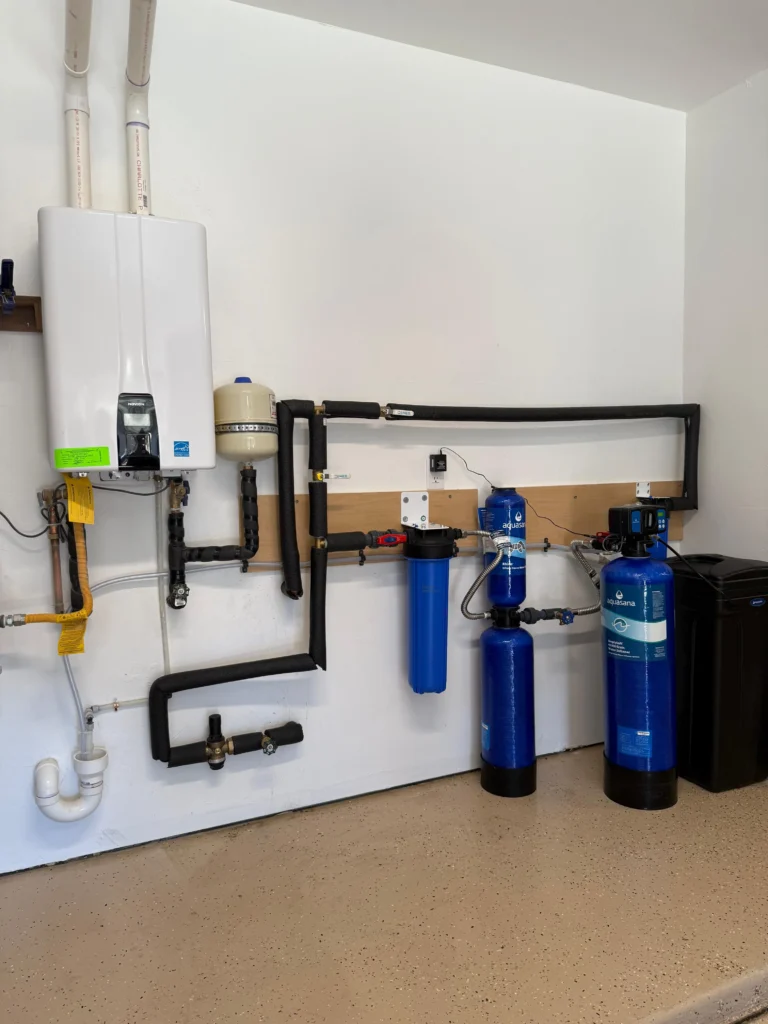
What’s Actually Different Between Filtration and Softening
A softener runs water through a resin bed to swap out calcium and magnesium — that’s what causes scale and hard water symptoms. A whole-house filtration system runs water through a different kind of media entirely, usually a sediment pre-filter followed by a carbon block, to pull out particles, chlorine, and taste and odor compounds. Neither one does the other’s job, which is why a lot of homes here run both — the softener handles hardness, the filter handles clarity and taste, and both feed off the same main line coming into the house.
Municipal water in Albuquerque, like nearly every city, gets treated with chlorine to keep it safe through the whole distribution system. That’s a good thing from a safety standpoint, but it’s also exactly why a lot of tap water here has a noticeable chlorine edge to it that a carbon filter removes almost completely.
Sediment is a separate issue, and it’s more about the condition of the pipes between the treatment plant and your house than anything about the water itself. Utility work, aging sections of municipal line, and even just normal wear can stir up sediment that ends up at your tap, especially right after nearby street or line work.
What We Actually Do on Install Day
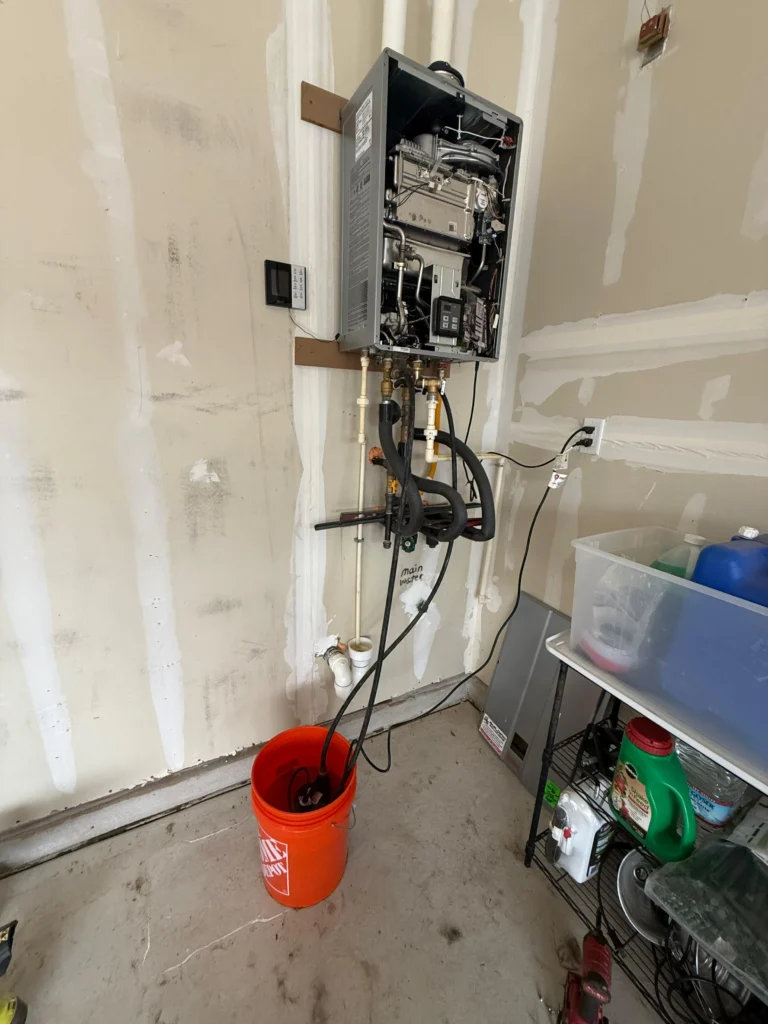
We start by checking your household’s flow rate — how many gallons per minute your house actually uses at peak times, since a filtration system sized too small creates a pressure drop everyone in the house will notice, and one sized generously handles multiple fixtures running at once without a problem.
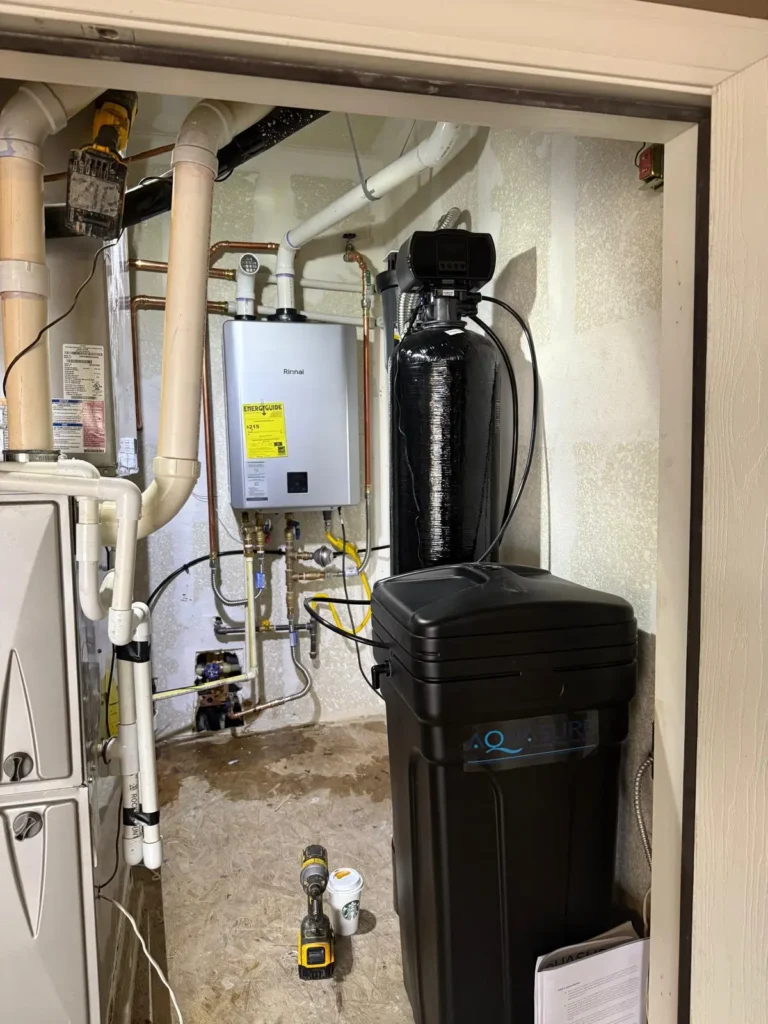
We install the system at the main line, typically right where it enters the house, before the water splits off toward the water heater and the rest of the plumbing. If you’ve already got a softener, we sequence the two properly — usually sediment filtration first to protect the softener’s resin bed from grit, then the softener, with carbon filtration positioned to handle taste and chlorine without interfering with the softening process.
The mistake we see most: homeowners buying an undersized unit off the shelf without ever checking their actual household flow rate, and then wondering why their shower pressure dropped after installing “the exact same” filter their neighbor has. Household size and fixture count change what size system actually makes sense.
What surprises people most is the sediment filter itself — on that first cartridge change a few weeks in, homeowners are often shocked at how much material was actually coming through water that looked completely clear at the tap the whole time.
We install a lot of these systems out near Nob Hill, where utility work along the Central corridor over the years has stirred up more sediment than folks expect from water that looks clean by the time it hits the glass — filtration catches what a quick glance never would.
The same logic holds in the older core of the city near Old Town, where service lines feeding individual homes vary a lot more than people assume — some updated over the decades, some original. Filtration doesn’t care what’s feeding the house upstream; it catches sediment and improves taste regardless of what kind of pipe the water traveled through to get there.
What You Can Check Yourself, and What’s Not DIY
Most systems have a clear housing on the sediment filter stage, so you can glance at it periodically and see if it’s looking dingy or needs a change — that part’s simple and doesn’t require any tools beyond what comes with the unit. Cartridge swaps on a system that’s already installed are usually a quick, homeowner-friendly job too, following whatever schedule came with your specific unit.
The actual installation isn’t something to take on yourself. It means working on your main water line, and getting the sequencing wrong — especially if you’re running filtration alongside an existing softener — can mean poor performance from both systems instead of either one working right. If a filter housing ever cracks or you notice active leaking around the unit, shut off the water at the main and treat it as an emergency plumbing call rather than waiting — a cracked housing under full house pressure can put out a lot of water fast.
Already Have a Softener That’s Acting Up Too?
If your existing softener isn’t performing the way it should while you’re looking at adding filtration, it’s worth having us look at both at once — see our Water Softener Repair page if that’s part of what’s going on, or Water Softener Installation if you don’t have one yet and want to talk through adding both systems together.
Filtration also does your water heater a favor over time — less sediment reaching the tank means less buildup on the bottom, which connects directly to how often it actually needs a flush. Worth a look at our Water Heater Maintenance & Flushing page, since a well-filtered system often stretches out how long a tank goes between visits, and it ties into our broader water heater services too.
Will This Mean No Water All Day?
No. A standard whole-house filtration install is usually a single visit, and the water’s only off for the time it takes to make the connection — not the whole day.
Will This Drop My Water Pressure?
Properly sized, no. A system sized to your household’s actual flow rate shouldn’t create a noticeable pressure difference. An undersized unit is where pressure problems come from, which is exactly why we size around real usage instead of a generic average.
Common Questions Before Installing
Do I need this if I already have a softener?
They do different jobs — a softener handles hardness, filtration handles sediment, chlorine, and taste. A lot of homes here run both for that reason.
How often do filters need to be changed?
Depends on the system and your household’s water use, but most sediment filters run several months between changes, with carbon stages typically lasting longer. We’ll set you up with a schedule specific to your unit.
Is this worth it for families with kids, like a lot of the households near Kirtland AFB?
A lot of families do go this route specifically for better-tasting drinking water day to day, especially with kids drinking straight from the tap more often than adults tend to.
Do older homes need anything different?
Sometimes. We’ve installed filtration in older homes around the South Valley where the original plumbing predates a lot of the treatment upgrades the city’s made over the decades. It’s an easy add either way, and it doesn’t require touching whatever’s already in the walls.
Can I get pricing before you start?
Yes, always — we’ll size the system to your household and give you a number before any work begins.
Your Neighbors Already Trust the Fix
EXCELLENTBased on 39 reviewsPosted on GoogleNadine EnciniasI had the best experience when I called J&J plumbing. Jonathan came out the same morning I called. The work was fast, efficient, affordable and he helped me when I needed it the most!!! I definitely recommend them for all your plumbing needs. Thank you ❤Posted on GoogleRoxanne AragonJ&J answered immediately and was able to service my plumbing emergency immediately. Jonathan was professional and trustworthy. I will be calling J&J for all future plumbing needs.Posted on GoogleJojo AragonHad a plumbing emergency and he was able to get to us right away. Honest, reliable and affordable. Will be calling him in the future for all plumbing work going forward.Posted on GoogleBon LasJohnathan was Professional, Fast & Efficient Fixed our plumbing leak with the quickness! Highly recommend.Posted on Googlejodi colchamiroJonathan was very efficient and communicative. He has good diagnostic skills and is a skilled independent plumber. I would highly recommend his services.Posted on GoogleYevette LuceroWe had J & J plumbing come out and replace our broken kitchen faucet . What impressed me was when I called he actually answered, instead of me having to leave a message and wait for a call back. Jonathan went above and beyond on our service call he got us scheduled same day and did an awesome job. I would highly recommend this company for any and all of your plumbing needs.Posted on GoogleCesar PinedoAfter calling big name companies they wanted to schedule us out days for an emergency plumbing issue. We called j&j plumbing and was answered by Jonathan who is very professional and came to fix our issue right away.Posted on GoogleYahir EnriquezGood job came quick and fixed are problemPosted on GoogleLuana VigilJ&J did a great job repairing/installing a kitchen faucet and outside spigot for us. They were on time and completed the work quickly and everything works perfectly!Posted on GoogleJudith Zubiagreat & fast service! we had a running toilet and they came out and fixed the issue quickly! thank you so much! 100% recommend!Verified by TrustindexTrustindex verified badge is the Universal Symbol of Trust. Only the greatest companies can get the verified badge who has a review score above 4.5, based on customer reviews over the past 12 months. Read more
Ready for Cleaner Water at Every Tap
Call J&J Plumbing and we’ll check your household’s flow rate, size the right system, and get it installed in a single visit. We’ve put these in all over Bernalillo County, from newer builds out in Westside and Rio Rancho homes running purely for taste and chlorine reduction, to older sections of town where sediment’s more of a factor.