
Water Softener Repair in Albuquerque, NM
If your softener’s stopped actually softening the water, running through salt way too fast, or throwing an error light you don’t recognize, that’s usually a fixable problem inside the control valve or the brine tank — not a sign you need a whole new system. Diagnosing it right the first time is part of the water softener and filtration work Jonathan and the crew handle across Albuquerque, and most repairs are a same-day fix.
Your Water Heater Experts in Albuquerque
Locally owned & operated in Albuquerque | Licensed in New Mexico | 24/7 emergency availability | 24+ 5-star reviews
EXCELLENT Based on 39 reviews
 Posted on Google
 Nadine EnciniasI had the best experience when I called J&J plumbing. Jonathan came out the same morning I called. The work was fast, efficient, affordable and he helped me when I needed it the most!!! I definitely recommend them for all your plumbing needs. Thank you ❤Posted on Google
 Roxanne AragonJ&J answered immediately and was able to service my plumbing emergency immediately. Jonathan was professional and trustworthy. I will be calling J&J for all future plumbing needs.Posted on Google
 Jojo AragonHad a plumbing emergency and he was able to get to us right away. Honest, reliable and affordable. Will be calling him in the future for all plumbing work going forward.Posted on Google
 Bon LasJohnathan was Professional, Fast & Efficient Fixed our plumbing leak with the quickness! Highly recommend.Posted on Google
 jodi colchamiroJonathan was very efficient and communicative. He has good diagnostic skills and is a skilled independent plumber. I would highly recommend his services.Posted on Google
 Yevette LuceroWe had J & J plumbing come out and replace our broken kitchen faucet . What impressed me was when I called he actually answered, instead of me having to leave a message and wait for a call back. Jonathan went above and beyond on our service call he got us scheduled same day and did an awesome job. I would highly recommend this company for any and all of your plumbing needs.Posted on Google
 Cesar PinedoAfter calling big name companies they wanted to schedule us out days for an emergency plumbing issue. We called j&j plumbing and was answered by Jonathan who is very professional and came to fix our issue right away.Posted on Google
 Yahir EnriquezGood job came quick and fixed are problemPosted on Google
 Luana VigilJ&J did a great job repairing/installing a kitchen faucet and outside spigot for us. They were on time and completed the work quickly and everything works perfectly!Posted on Google
 Judith Zubiagreat & fast service! we had a running toilet and they came out and fixed the issue quickly! thank you so much! 100% recommend!Verified by TrustindexTrustindex verified badge is the Universal Symbol of Trust. Only the greatest companies can get the verified badge who has a review score above 4.5, based on customer reviews over the past 12 months. Read more
Get Free Estimate Now
Water Tastes or Feels Salty
That usually means the brine tank is over-cycling into your water supply instead of just regenerating the resin bed the way it’s supposed to.
Hard Water Symptoms Are Back — Scale, Spots, Stiff Laundry
If the softener’s still running but the hard water signs have crept back, the resin bed’s likely not exchanging minerals the way it should anymore, or the unit isn’t regenerating on schedule.
Control Valve Has a Blinking Light or Error Code You Don’t Recognize
Modern control valves are basically small computers, and a blinking light almost always means it’s flagging something specific — worth calling before it just keeps running blind.
Brine Tank Isn’t Draining, or There’s Standing Water in It
Standing water in the brine tank after a regeneration cycle usually means the drain line’s clogged or the injector isn’t pulling brine through correctly.
You’re Going Through Salt Way Faster Than You Used To
A unit that’s suddenly burning through bags of salt every few weeks instead of every month or two is usually stuck regenerating more often than it needs to.
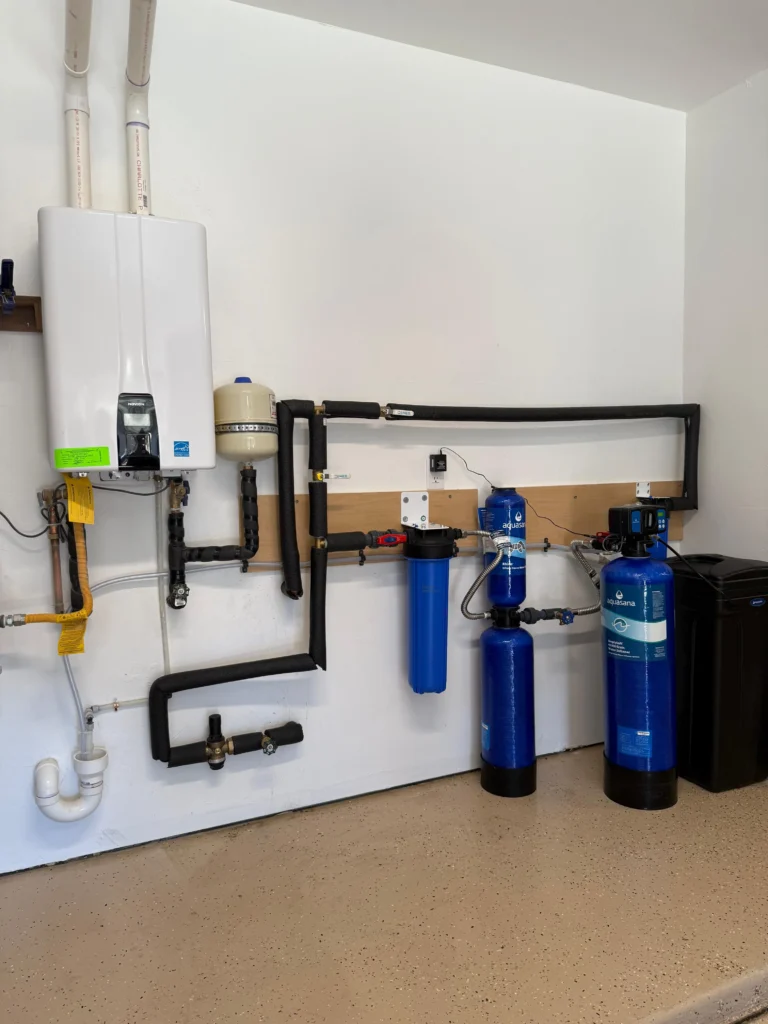
What’s Actually Going Wrong Inside the Unit
The most common culprit is a salt bridge — a hardened crust that forms above the water line inside the brine tank and blocks salt from actually dissolving into the water below it. From the outside the tank looks full of salt, but the softener’s pulling from an empty reservoir underneath, which is why the resin bed stops regenerating even though nobody forgot to add salt. Salt bridges tend to form faster with certain lower-quality salt types, or when a tank’s been overfilled and humidity’s had a chance to work on it over time.
The injector, sometimes called the venturi, is a small part that uses water pressure to pull brine out of the tank and push it through the resin bed during regeneration. It’s also one of the easiest parts to clog with sediment or salt residue, and when it’s clogged, the whole regeneration cycle stops working even if everything else is fine. A clogged injector is a quick fix once we know that’s the actual problem — the tricky part is that the symptoms look identical to a dying resin bed unless someone actually opens it up and checks.
The control valve itself runs the whole show — timing the regeneration cycle, tracking water usage on metered systems, and switching between softening and backwash modes. On older units, the motor or the internal timer can wear out or lose calibration, which either stops regeneration from happening at all or triggers it far more often than the household actually needs.
Iron and sediment in the source water can also foul the resin bed over time, coating the resin beads so they can’t exchange minerals as efficiently, even though the resin itself isn’t technically dead yet.
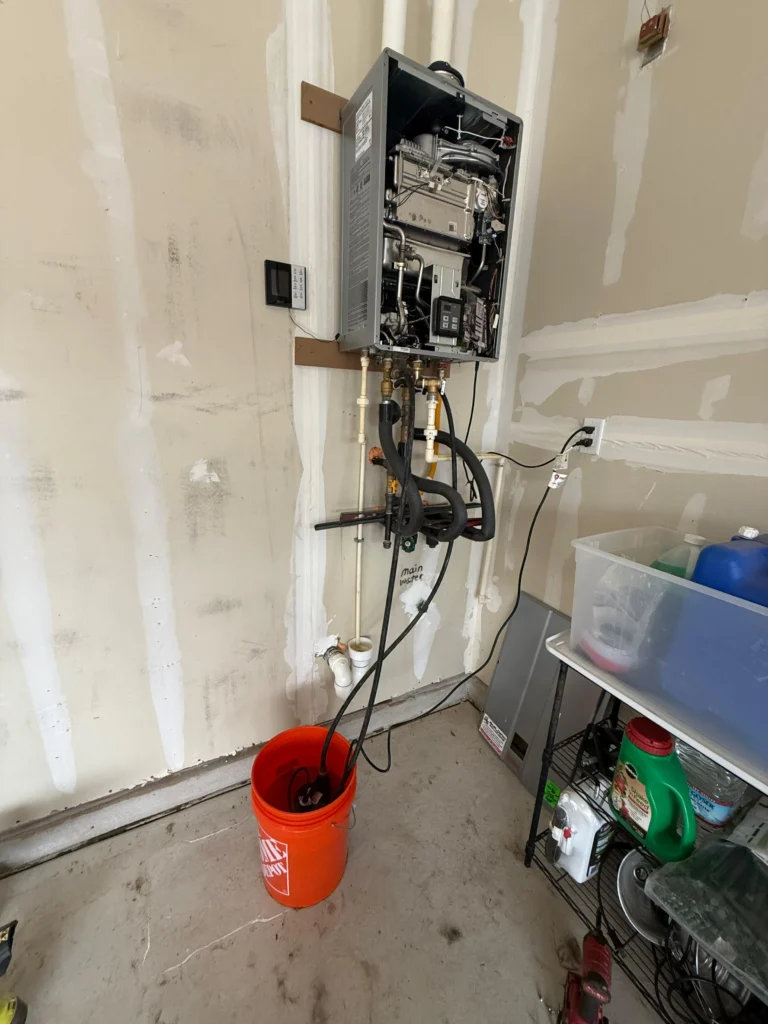
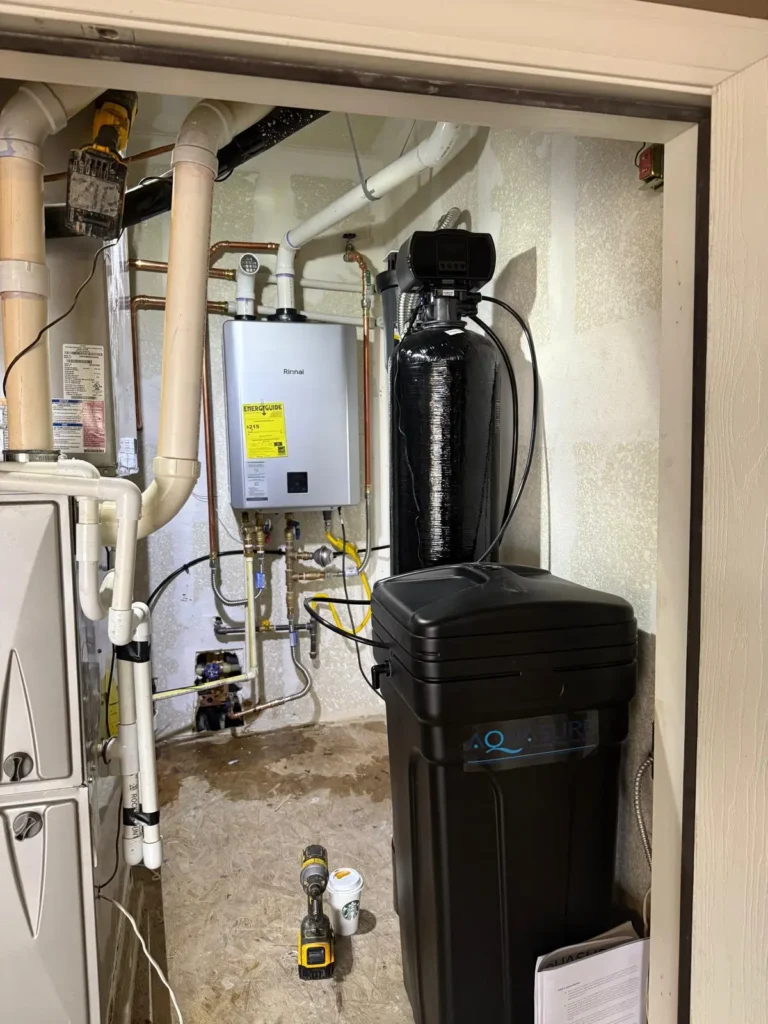
What Actually Happens on Installation Day
We start by testing your actual water hardness rather than assuming a number, since that’s what determines the right size unit for your household — a softener sized for a smaller home won’t keep up with a family of five, and one that’s oversized just wastes salt and water on regeneration cycles you don’t need. We also factor in things like how many bathrooms are running and whether you’ve got any water-heavy appliances, since sizing off square footage alone tends to miss the mark.
We tie the unit into your main line, typically right where it enters the garage or utility area, before it splits off toward your water heater and the rest of the house. We install a bypass valve as part of that connection, which lets outdoor spigots and irrigation lines skip the softener entirely — no reason to run softened water to your hose bib or sprinklers, and it saves salt in the long run. We run a drain line for the brine tank’s regeneration discharge, and we test the water afterward to confirm the hardness is actually where it should be, not just assume the install worked.
The mistake we see homeowners make when they’ve had a bad experience before: buying an undersized unit off the shelf without ever testing their actual water hardness, and then wondering why the scale never really goes away. We size around your real numbers, not a generic average.
What surprises people most is how fast the difference shows up — most people notice a change in how their skin and hair feel within the first week, well before the scale on old fixtures fully clears.
Homes in Los Ranchos and pockets of North Valley still on private wells tend to run even harder than the municipal average, since well water there often carries more dissolved mineral content before it ever reaches the tap — those installs sometimes need a slightly larger unit to keep up.
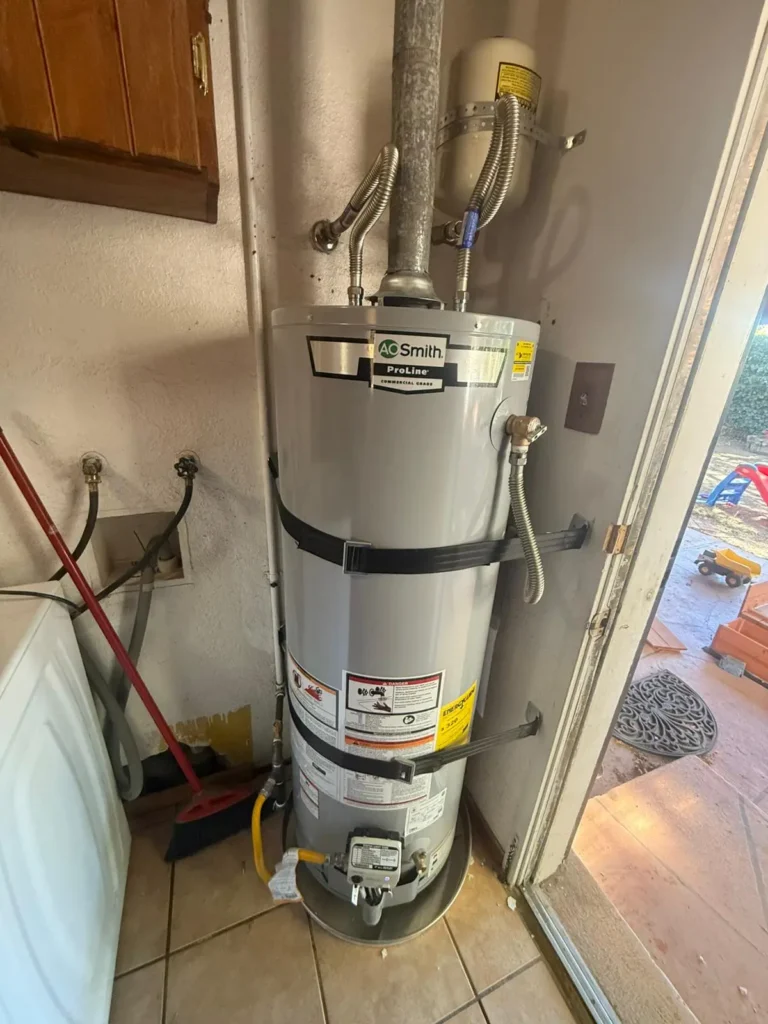
What We Actually Check When We Come Out
We test your water first, both before and after the softener, so we know exactly how much softening is actually happening versus how much should be. We check the brine tank for a salt bridge — sometimes as simple as gently breaking up a hardened crust with a stick to get things flowing again. We check the injector screen for clogging, check the drain line for kinks or blockages, and check the control valve’s settings against your actual household size, since a unit that was set up for the wrong household from day one will always seem to be malfunctioning even when every part is technically fine. On metered units we also check that the meter itself is registering usage correctly, since a stuck meter can throw off regeneration timing just as badly as a mechanical failure.
The mistake we see constantly: someone notices the error light, ignores it for a few months hoping it resolves itself, and by the time we get there, the resin bed’s been running unregenerated long enough that it’s fouled beyond a simple fix. Catching it early is almost always cheaper and faster than catching it late.
What surprises most people is how often the fix is genuinely small — breaking up a salt bridge or cleaning an injector screen, not tearing into the resin tank or replacing the whole unit.
We run into salt bridging and injector clogging a lot in Bernalillo, where well water often carries iron along with the calcium and magnesium, and iron fouls a resin bed and clogs an injector screen faster than hardness alone ever would. Out closer to the foothills on the East Side, elevation changes affect incoming water pressure more than people expect, and low pressure feeding the injector can mimic the same symptoms as a clog even when the injector itself is clean.
What You Can Check Yourself First
You can look inside the brine tank for a hard crust sitting above the water line — that’s the salt bridge, and sometimes gently breaking it up with a broom handle solves the problem on the spot. Check that the bypass valve is set correctly too, since it’s easy for that to get bumped or left in the wrong position during other work nearby.
Past that, we wouldn’t recommend getting into the control valve’s internal electronics or pulling the resin tank apart yourself. Those parts are specific to each brand and model, and a wrong reassembly can turn a repair into a full system replacement.
Repair It or Replace It? Here’s the Honest Line
If the resin bed’s still in reasonably good shape and it’s the control valve, injector, or a salt bridge causing the problem, repair is almost always the right call, and usually the cheaper one. If the unit’s pushing past 10-12 years, the resin bed’s been fouled for a long stretch without regenerating, or parts for an older control valve are getting hard to source, that’s when we’ll walk you through Water Softener Replacement honestly instead of patching something that’s not going to hold. We’d rather tell you a repair isn’t worth it than sell you parts for a unit that’s already on its way out.
If hard water’s already done damage elsewhere in the house — shortened water heater life, more frequent flushing, early fixture wear — it’s worth mentioning to us while we’re there, since that connects back to our water heater services too.
Will This Fix It Right Away, or Take a While to Notice?
Once the repair’s done and the unit runs a full regeneration cycle, you should notice softer water again within a day or so. It’s not usually instant the second we leave, since the resin bed needs that first cycle to fully reset.
Is This Going to Be a Big, Messy Job?
No. Almost everything we’re checking and repairing is inside the brine tank, the control valve head, or the drain line — we’re not tearing into walls or shutting the whole house down for hours.
Common Questions About Softener Repairs
Why is my water suddenly hard again if the softener’s still running?
Usually a fouled resin bed, a clogged injector, or a control valve that’s stopped regenerating on schedule — all things we can diagnose in one visit.
Is repair ever not worth it?
Sometimes, if the unit’s old and the resin bed’s too far gone. We’ll tell you straight if replacement’s actually the smarter money.
I’m in an Uptown condo and I’m not sure which bypass valve is mine — can you help sort that out?
Yes, that comes up a lot in multi-unit buildings around Uptown and closer to Nob Hill, where softener loops sometimes aren’t clearly labeled. We trace the lines before touching anything.
Can you get pricing to me before starting any repair work?
Yes, always — we’ll tell you what we found and what it costs before we touch anything.
Your Neighbors Already Trust the Fix
EXCELLENTBased on 39 reviewsPosted on GoogleNadine EnciniasI had the best experience when I called J&J plumbing. Jonathan came out the same morning I called. The work was fast, efficient, affordable and he helped me when I needed it the most!!! I definitely recommend them for all your plumbing needs. Thank you ❤Posted on GoogleRoxanne AragonJ&J answered immediately and was able to service my plumbing emergency immediately. Jonathan was professional and trustworthy. I will be calling J&J for all future plumbing needs.Posted on GoogleJojo AragonHad a plumbing emergency and he was able to get to us right away. Honest, reliable and affordable. Will be calling him in the future for all plumbing work going forward.Posted on GoogleBon LasJohnathan was Professional, Fast & Efficient Fixed our plumbing leak with the quickness! Highly recommend.Posted on Googlejodi colchamiroJonathan was very efficient and communicative. He has good diagnostic skills and is a skilled independent plumber. I would highly recommend his services.Posted on GoogleYevette LuceroWe had J & J plumbing come out and replace our broken kitchen faucet . What impressed me was when I called he actually answered, instead of me having to leave a message and wait for a call back. Jonathan went above and beyond on our service call he got us scheduled same day and did an awesome job. I would highly recommend this company for any and all of your plumbing needs.Posted on GoogleCesar PinedoAfter calling big name companies they wanted to schedule us out days for an emergency plumbing issue. We called j&j plumbing and was answered by Jonathan who is very professional and came to fix our issue right away.Posted on GoogleYahir EnriquezGood job came quick and fixed are problemPosted on GoogleLuana VigilJ&J did a great job repairing/installing a kitchen faucet and outside spigot for us. They were on time and completed the work quickly and everything works perfectly!Posted on GoogleJudith Zubiagreat & fast service! we had a running toilet and they came out and fixed the issue quickly! thank you so much! 100% recommend!Verified by TrustindexTrustindex verified badge is the Universal Symbol of Trust. Only the greatest companies can get the verified badge who has a review score above 4.5, based on customer reviews over the past 12 months. Read more
Get Your Softener Actually Softening Again
Call J&J Plumbing and we’ll test your water, find out what’s actually wrong, and get it fixed — usually in one visit. We’ve repaired these systems in homes all over Bernalillo County, from well-fed units out in Bernalillo to tucked-away closet installs near Downtown and out toward the East Side.